How many decades could you bear to wait, before seeing your brother again?

I’ve been following this story: the rare family reunions that some Koreans have waited over six decades for! Since the Korean War over sixty years ago, the border between North Korea and South Korea  became more than just a line drawn in the earth. It became an impenetrable boundary, dividing families, casting a shadow on generations. Some 72,000 South Koreans remain on the waiting list, hoping for a reunion with a brother, sister, cousin or child living in North Korea. About half are over the age of 80.

In a society where we are bombarded with the double-edged power/curse of instant connectivity, it is both refreshing and heartbreaking to see the force of a human bond that transcends any technology invented for communication. The human bond to another, can endure 64 birthdays worth of separation with zero communication. No exchange of sight, touch, sound, or even written message.

In fact, it can endure much longer. But I can hardly bear the thought of putting that to the test!

South Korean Lee Young-sil (right), 87, cries after meeting her North Korean sister Lee Jung-sil, 84, during their family reunion at the resort in North Korea. [From the Daily Mail]
The reunions are a rare occasion.  The actual reunion between families lasts only hours! Only about a hundred relatives have been able to take part at a time. There is a lottery system  in South Korea to determine who is invited, while in the North, people say that politics are involved. The most recent round of reunions concluded just yesterday, and they do not happen often enough. In the past, reunions were cancelled or heavily threatened months prior, when North Korea would disapprove of something going in the South. People must also undergo medical check-ups before being cleared to see their relatives.

Brothers, sisters and families –  separated as young children – now come to meet each other with cane in hand, sitting in a wheelchair, or transported via ambulance.

Here’s a quote from a man meeting his brother after 64 birthdays. He was twelve when he last saw his older brother:

“It’s hard for people to understand what it’s like when you’ve been separated so long, but it’s a true miracle; I’m so elated. All that was missing in my life was my brother, and now that I can see him again, I’d have no regrets whatsoever if I were to die tomorrow.” -Lee Du-young, South Korean

A 100-year old woman, for a reunion a few years ago, prepared to see her daughter after over half a century of separation! Her daughter was sixteen when she last saw her, and she had thought of her every day since.

After the war (1950-1953), Korean family members were separated by the division of the peninsula. There was no peace treaty, just a ceasefire. Who knew that the separation would be a constant in their lives? They wait not just years, but full lifetimes. They continue to wait today. 

This file photo taken on 31 October 2010 shows an elderly South Korean man wiping his tears as a North Korean relative (in the bus) waves to say good-bye after a luncheon during a separated family reunion meeting
South Korean Namgung Bong-ja (right) and her North Korean father Namgung Ryul, 87,
cry as they say goodbye to each other. [From the Daily Mail.]
Tearful: South Koreans hold hands with their North Korean family members (pictured inside bus)
before they are separated again. [From the Daily Mail]


What joy to be back together with a loved one, for even a moment. But how deep, too, the grief over the lifetime spent without, and the continued separation of the years to follow. Reunited families separate knowing they may never see each other again. 

How often we take for granted and abuse the capacity to reach a loved one at the touch of a device. With technology today, it takes a split second for a message, call or video feed to reach someone you care about on the other side of the planet. We hardly realize this continuous exchange of communication and what a privilege it actually is. 

But do not rely on only that, not only on the connectivity infrastructure that society has built. Break it down a bit. Though we may never be subject to such harsh and extreme separation against our will, we have every reason to treasure each touch, word and moment with relative and friend.

Elderly South Koreans travelled through falling snow with their families to North Korea’s Diamond Mountain to reunite with relatives they had not seen since the Korean War. Pictured is South Korean Park Yang-gon, left, and his North Korean brother Park Yang Soo. [From the Daily Mail.]
A South Korean man selected to attend joint North and South family reunions sits in the lobby of a hotel as he prepares to depart for the North Korean border, in the eastern port city of Sokcho. [From the Daily Mail]
Read about this story on the news: here, here or here. 

Based on reports and photographs as published by BBC News and the Daily Mail.
In every card, a story of hope: The Paper Project Inc.

We run a social business called The Paper Project Inc

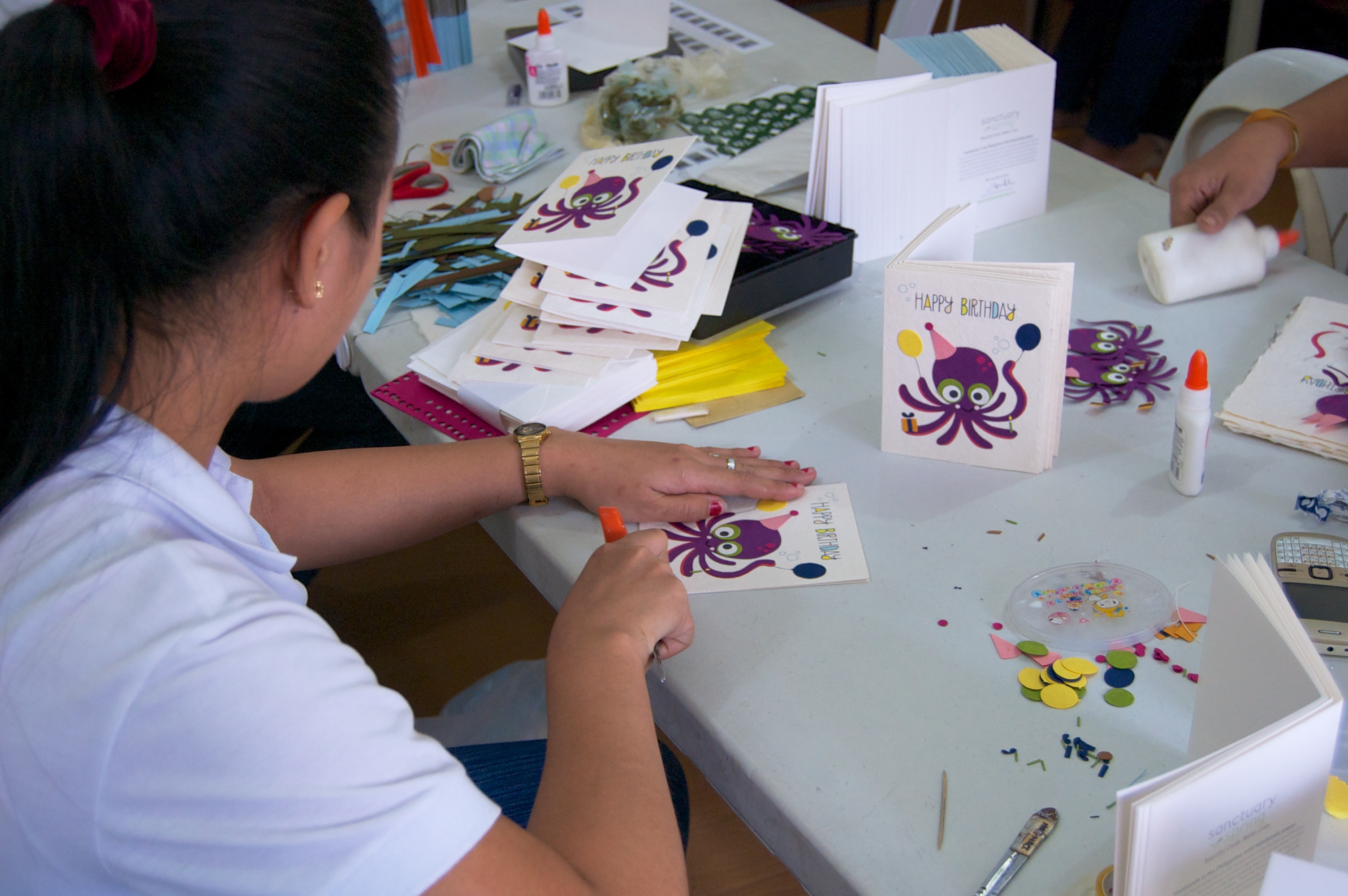
We employ women survivors of abuse, victims of oppression or women escaping flesh trades like prostitution or trafficking. These women are our precious card makers. We make handmade greeting cards.

storyofhope

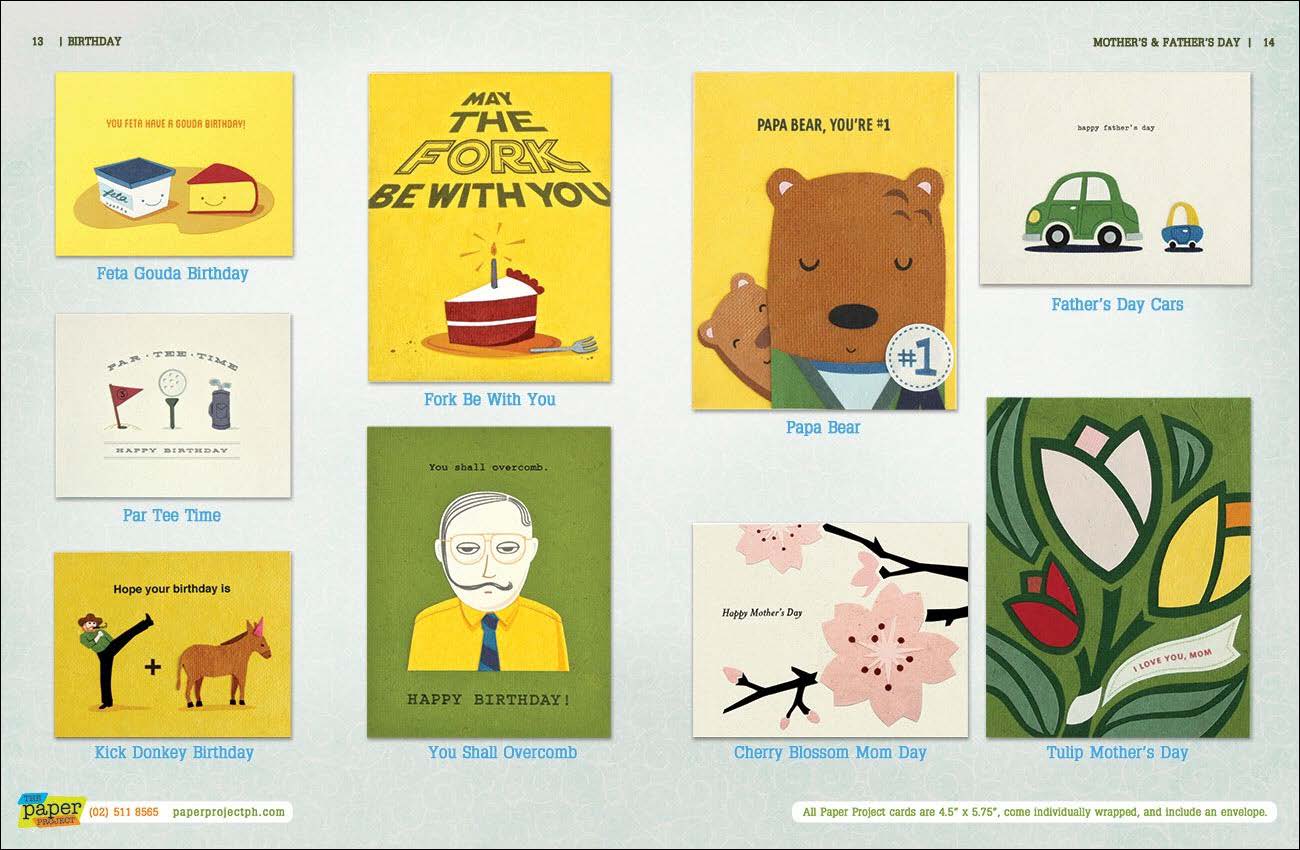
Our cards have more soul and story than that musical e-card you sent out for the holidays. They are likely more special than the last card you saw your neighborhood bookstore. Our cards make it to thousands of stores across the United States through our partners at Good Paper. Recently our work has also made it to Australia and Germany too. But that isn’t the special part.

DSC_0676

PaperProjectCardCatalog_Page_08

People have often commented that my job must be sad or depressing – because of the history of abuse or oppression in my worker’s lives. If you think my job is gloomy too, you are focusing on the wrong side of the story. In fact, my job is the exact opposite of sad and depressing. 

At The Paper Project Inc., we focus on the hope of a life renewed. And we start with a simple craft. This craft provides a stable livelihood and a community in which to grow. 

A full life can still be led by those who have been broken.

I love to share the story of our card maker Esther*:

cm

Esther used to wander the streets of Metro Manila. She had been abused in the past, had no contact with her parents, and for a long time didn’t even have a copy of her birth certificate. With scarce opportunities for livelihood, having barely started high school, Esther now turned to vices for survival. One of our partner organizations referred Esther to us after seeing her waste her days away, hanging out at street known for gamblers, pick-pockets, pimps and prostitute pick-ups.

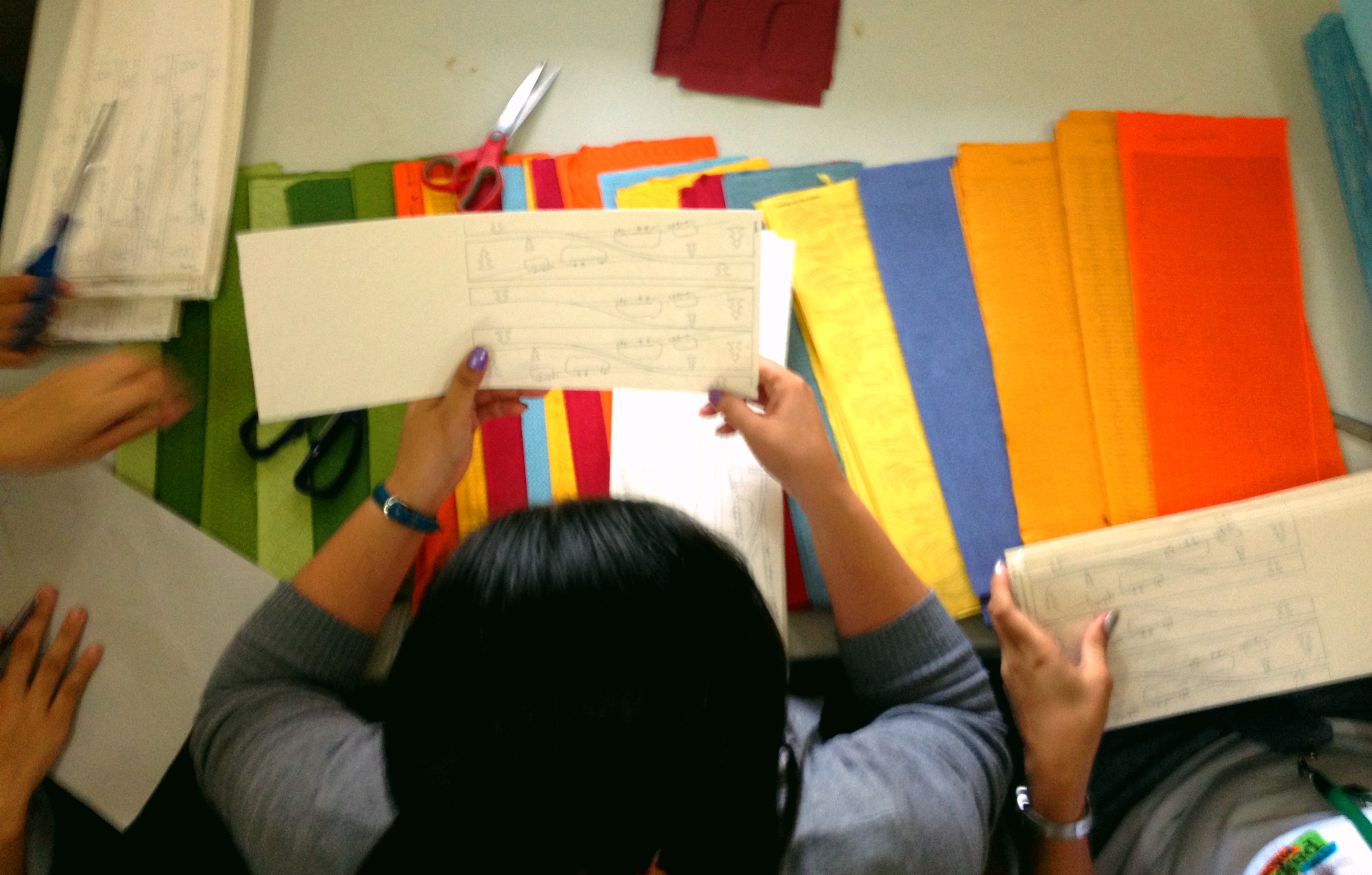
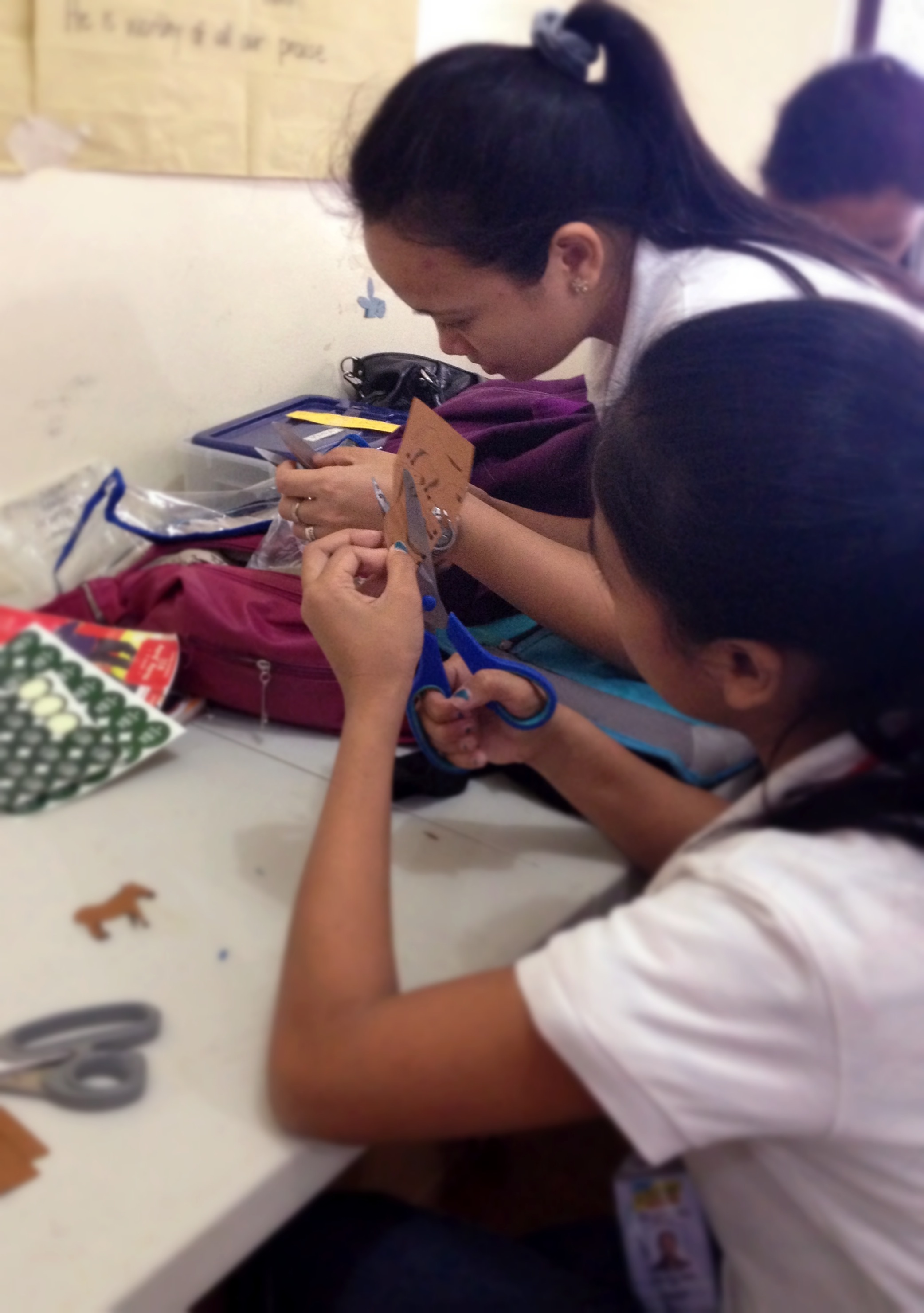
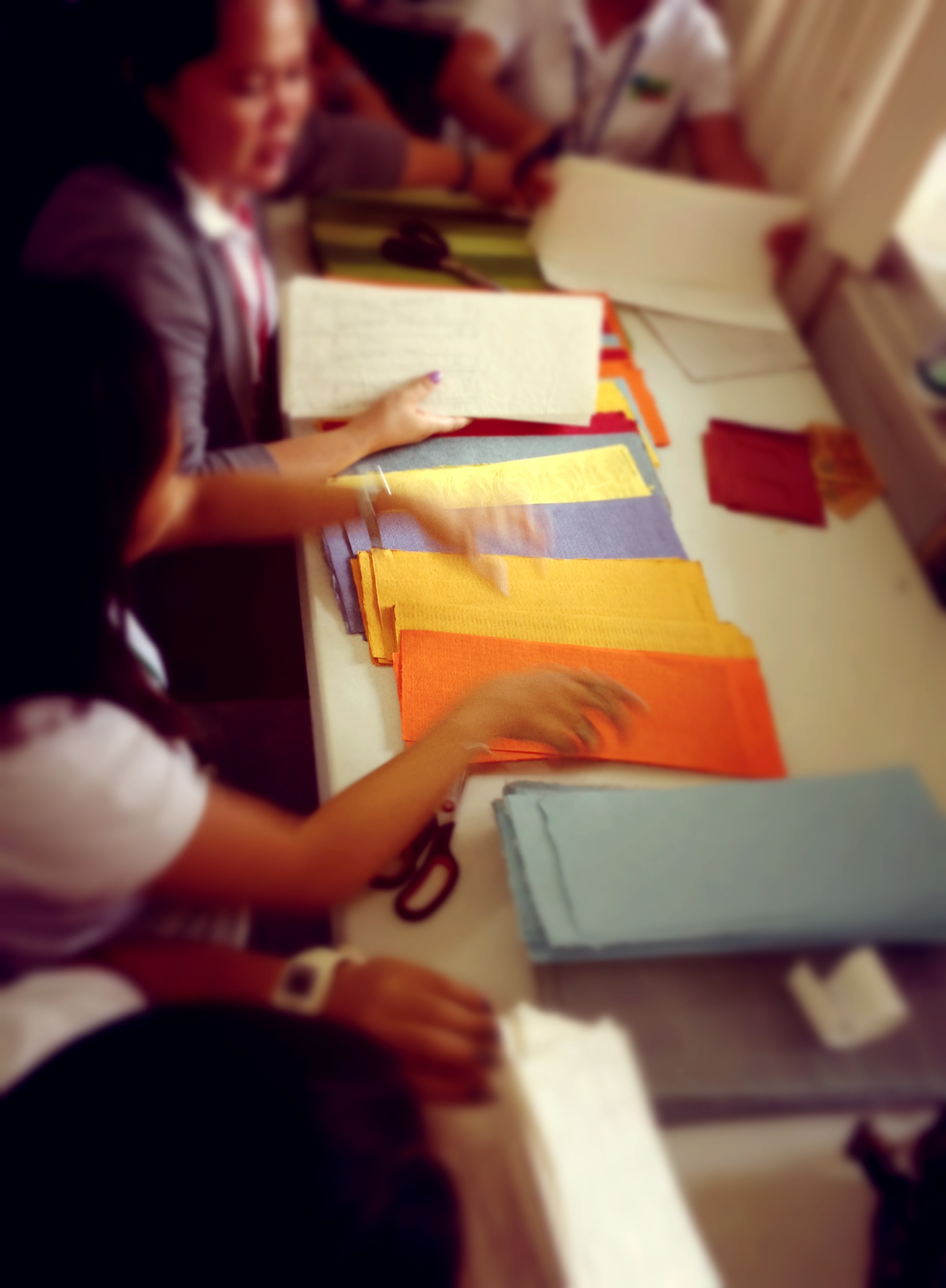
We welcomed Esther into our workshop where she learned how to cut and assemble cards out of handmade abaca paper. The training process is actually not as easy as it sounds. The individual parts of the card design can be very small or intricate. A card maker must learn the precise art of cutting all sorts of shapes that were sometimes easily the size of your tiniest toenail. Edges have to be smooth. Assembly has to be accurate. We pride ourselves in high quality craftsmanship. You’ll see it across all the products we create.

cm4

You never know how each new trainee will take to the work. Not long after her start with us, Esther was overheard on the street by her social worker, speaking confidently and excitedly about her new job. She boasted to friends, but in the most earnest way possible, about her work in a nearby city’s business district. She was hopeful and full of excitement.

She was talking to her friends on the same street where other women continue to trade their bodies for their next meal.

In her new community at The Paper Project, Esther bloomed. In less than eight weeks, she was given the privilege to train other women in cardmaking. She was even earned the responsibility to manage the quality control of our completed cards. Today she continues to thrive in our card making workshop.

cm5

Just having a basic uniform transformed the way Esther carried herself. Having a place she needed to be at, where attendance was taken and where she had assignments to complete – this transformed her sense of daily purpose. A pay check at the end of two weeks and women to fellowship with – these transformed her lifestyle and self-worth.

In every card, a story of hope. And hope grows.

Maybe one day you will also hold in your hand a card lovingly made by one of our beautiful women. 

Like The Paper Project on Facebook or follow us on Instagram

PaperProjectCardCatalog_Page_01

*Pseudonym.

Haiyan/Yolanda 004: Hope from a Ukelele & 130 Voices of Children Singing

I had my doubts about teaching 130 children a whole song in just a short bit of time.

We’d have just a few hours with the kids and the music was supposed to inspire a celebration, not a language lesson. Our message was hope, and we didn’t want it lost in translation.

The song was written in English, save for one key line written in their home language, Ilonggo. We were quite certain that the kids, all natives of Lawaan, Capiz, were fluent in Ilonggo and could more or less understand Tagalog. We were clueless about their understanding of English.

I speak Tagalog, with a meager understanding or Ilonggo. Milan, who wrote the song and would be leading the music, spoke neither Tagalog nor Ilonggo.

How exactly was this going to go?

It went spectacularly. Milan wrote the song especially for the children of Roxas, who had just two and a half months earlier, survived one of the strongest typhoons ever recorded in history. They lost their roof, their homes, their parent’s livelihood, a stable source of food or supplies.

What a privilege it was for us to spend an afternoon with this children. We were optimistic that they hadn’t lost their hope. If you watch this video, you’ll see that’s true.

See them clap their hands, stomp their feet, and sing out loud! Hope is not lost in this generation!

Haiyan/Yolanda 003: Hope From the Storm-Tackled Kalachuchi Tree

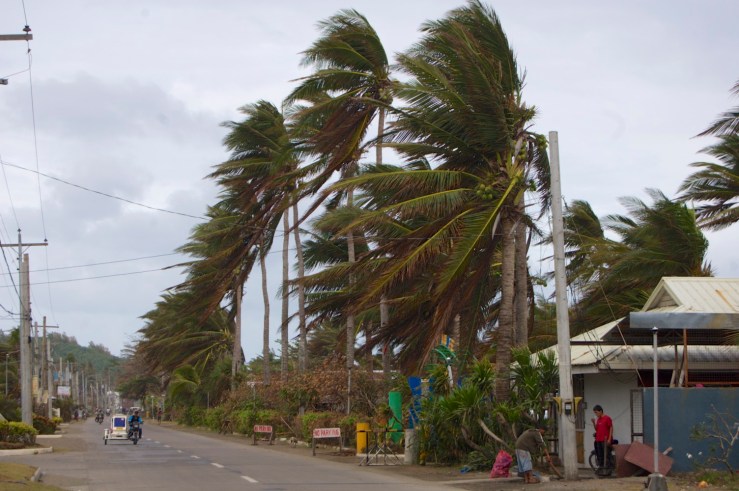
Today, the trees are forever blowing in one direction near the shore of Capiz. Ever since the super typhoon hit in November, all their branches sling away from the sea. Like a cartoon character’s long hair when someone yells in their face, or when it’s been electrocuted. But the trees aren’t cartoons, and Yolanda wasn’t playing around when she howled at the Philippines.

DSC_0925

Sustained winds were reported at at 195 mph, with gusts reaching even 235. Internationally called Haiyan, the storm was locally known as Yolanda. In Roxas City, Capiz – glass shattered, signage torn off buildings, roofs whipped clear off their structures. Yolanda left a mess.

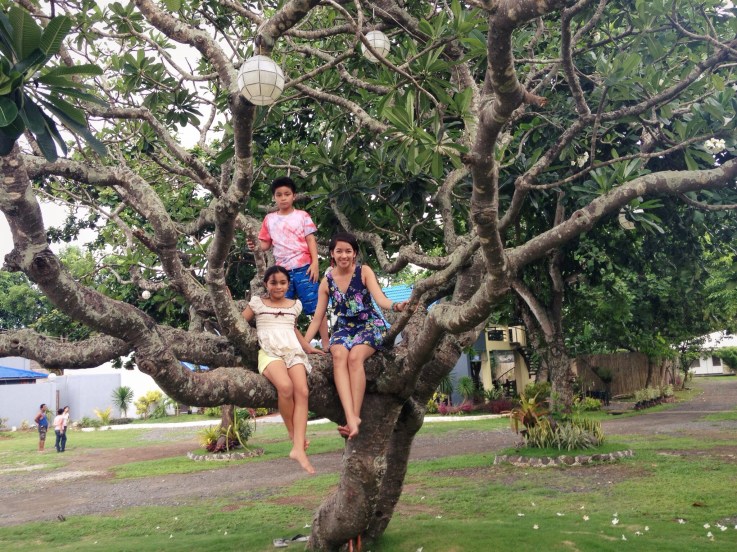
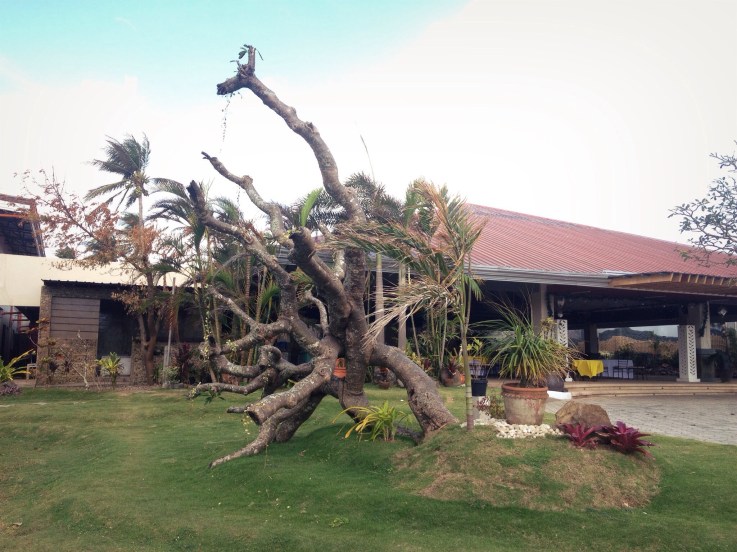
In June last year I climbed a kalachuchi tree in our friend’s front yard in Roxas City. The kids, Carrie and Iggy, showed me the tree, and did tricks as I watched from a branch. It was a beautiful and strong tree.20140128-133054.jpg

After Yolanda, this same kalachuchi tree now tilts, bowing away from shore, toward the mountain. It’s roots held on in the howling wind that brought down shanties, nipa huts, electric posts and uprooted many other old trees. Instead of helping the kalachuchi tree upright as they thought they might, our friends decided to let it grow as it was, now leaning at an angle.

Two days later, in the storm’s wake, new green sprouted on the kalachuchi tree! The comfort of new life to come. This tree became the inspiration for the art we made with the children of  Capiz.

20140128-133203.jpg

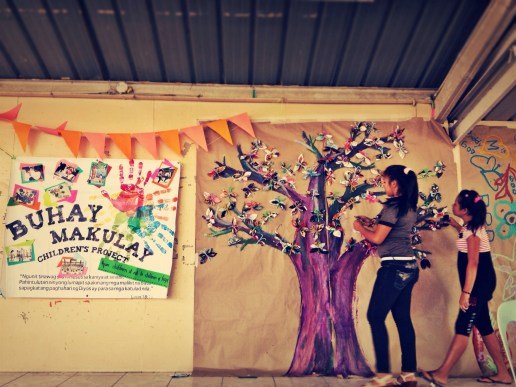
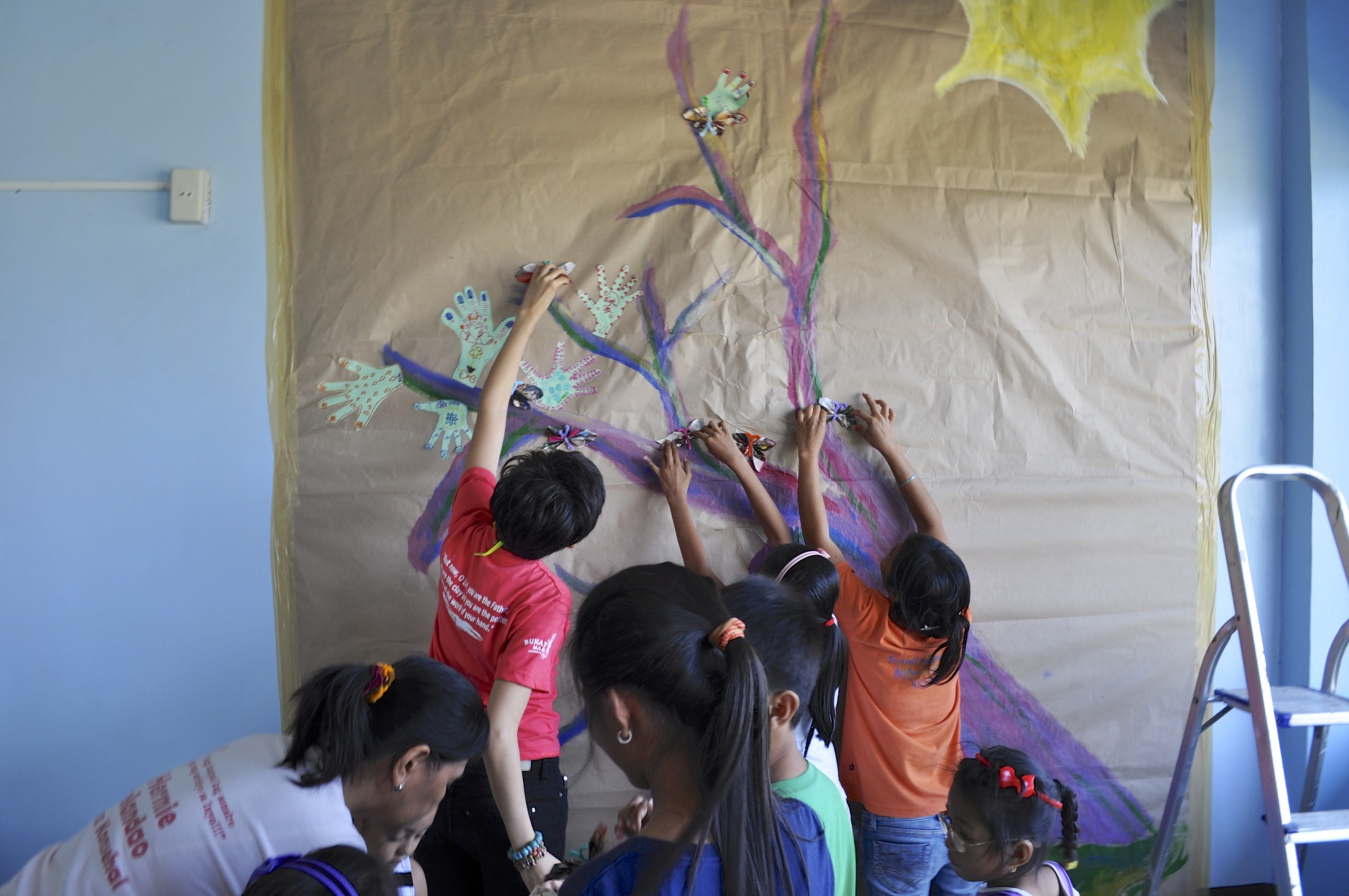
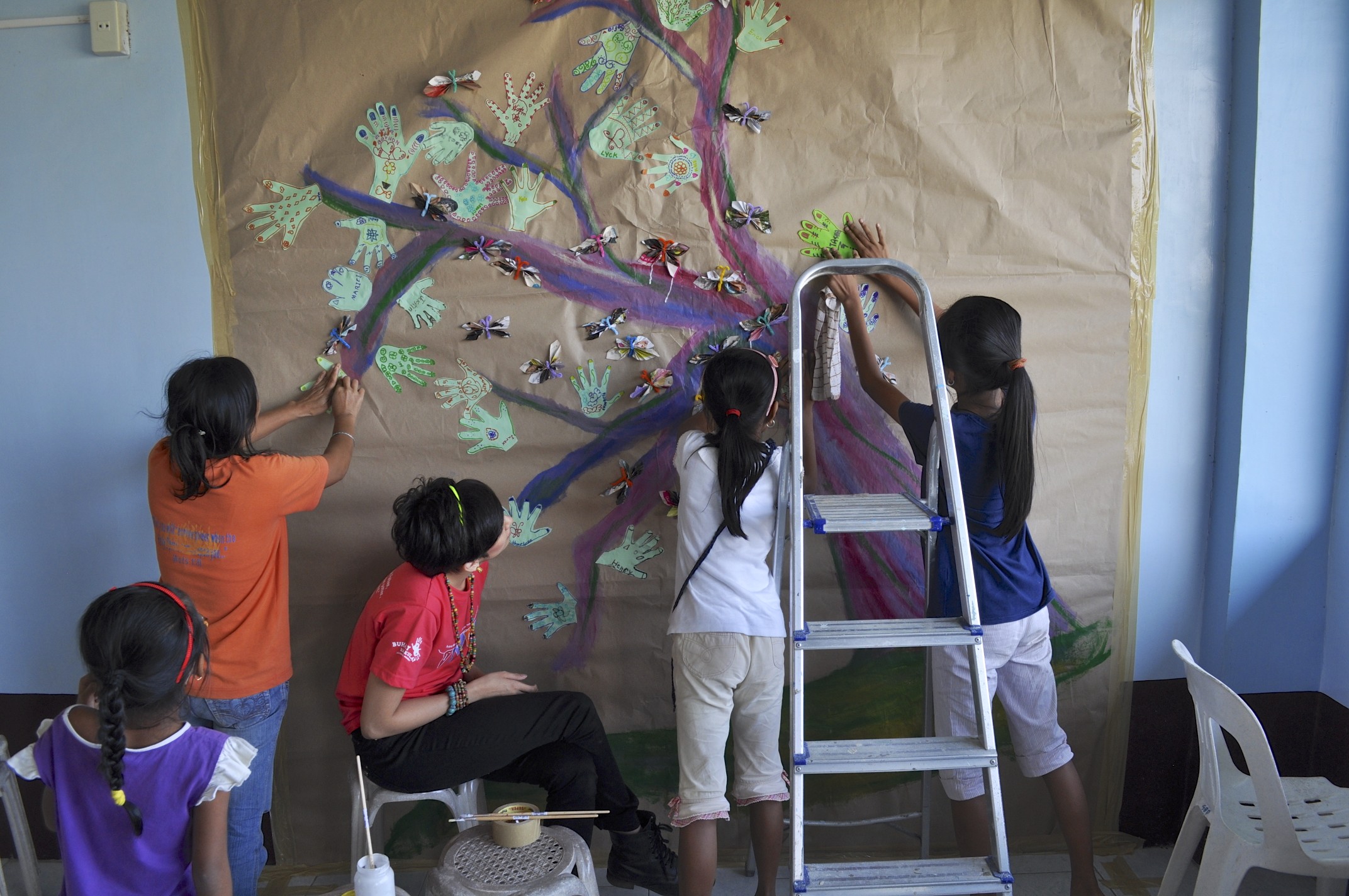
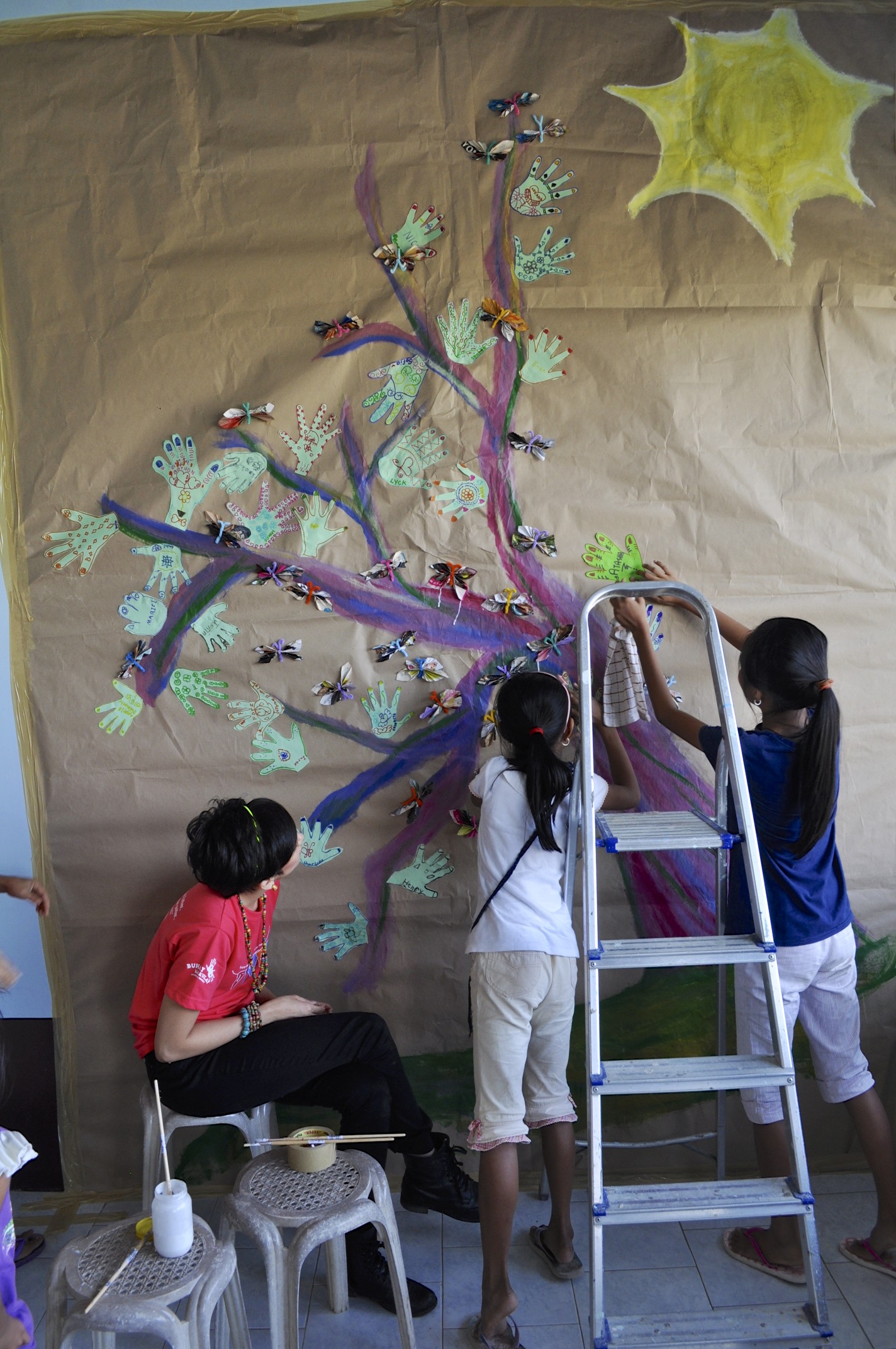
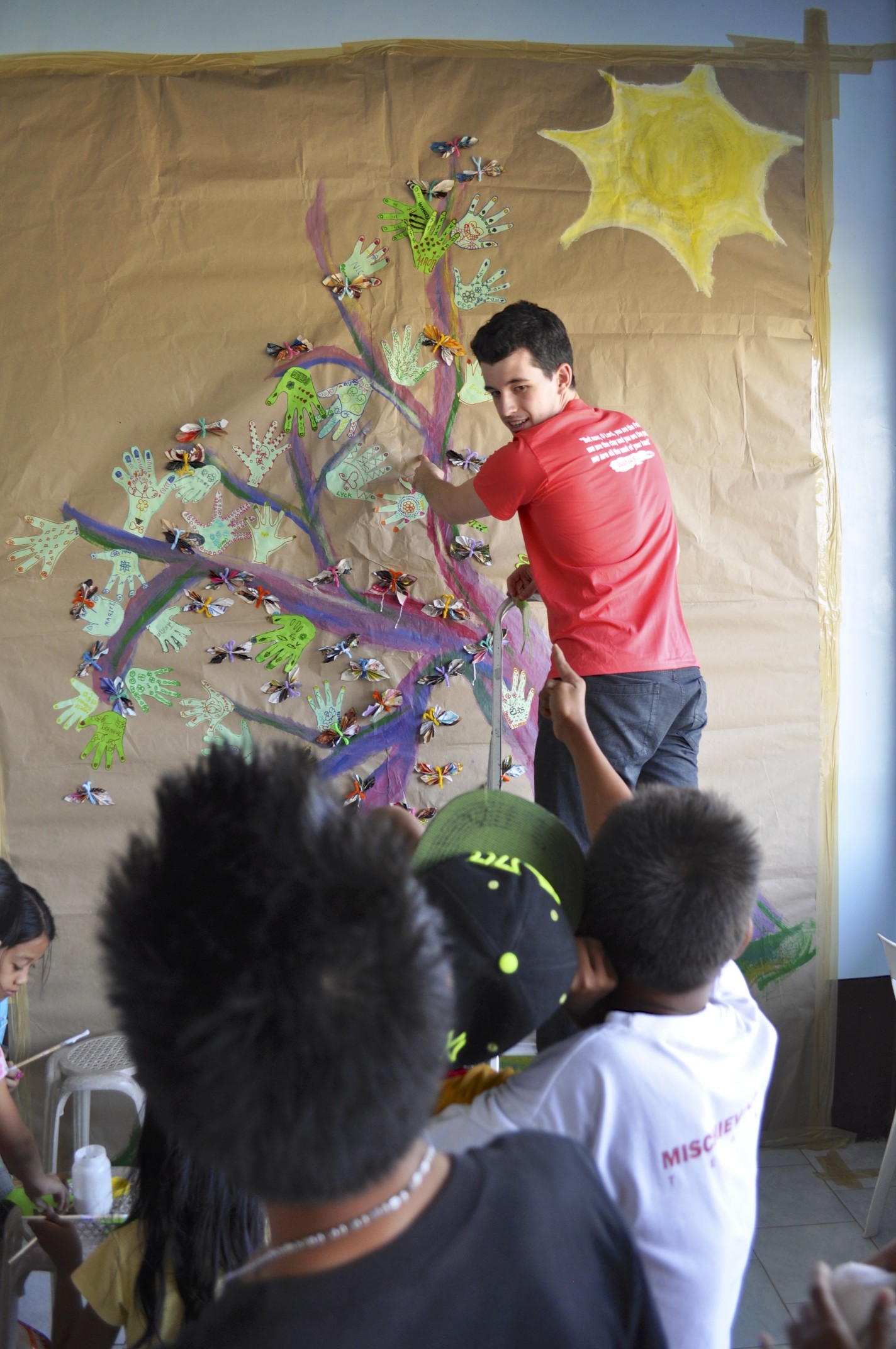
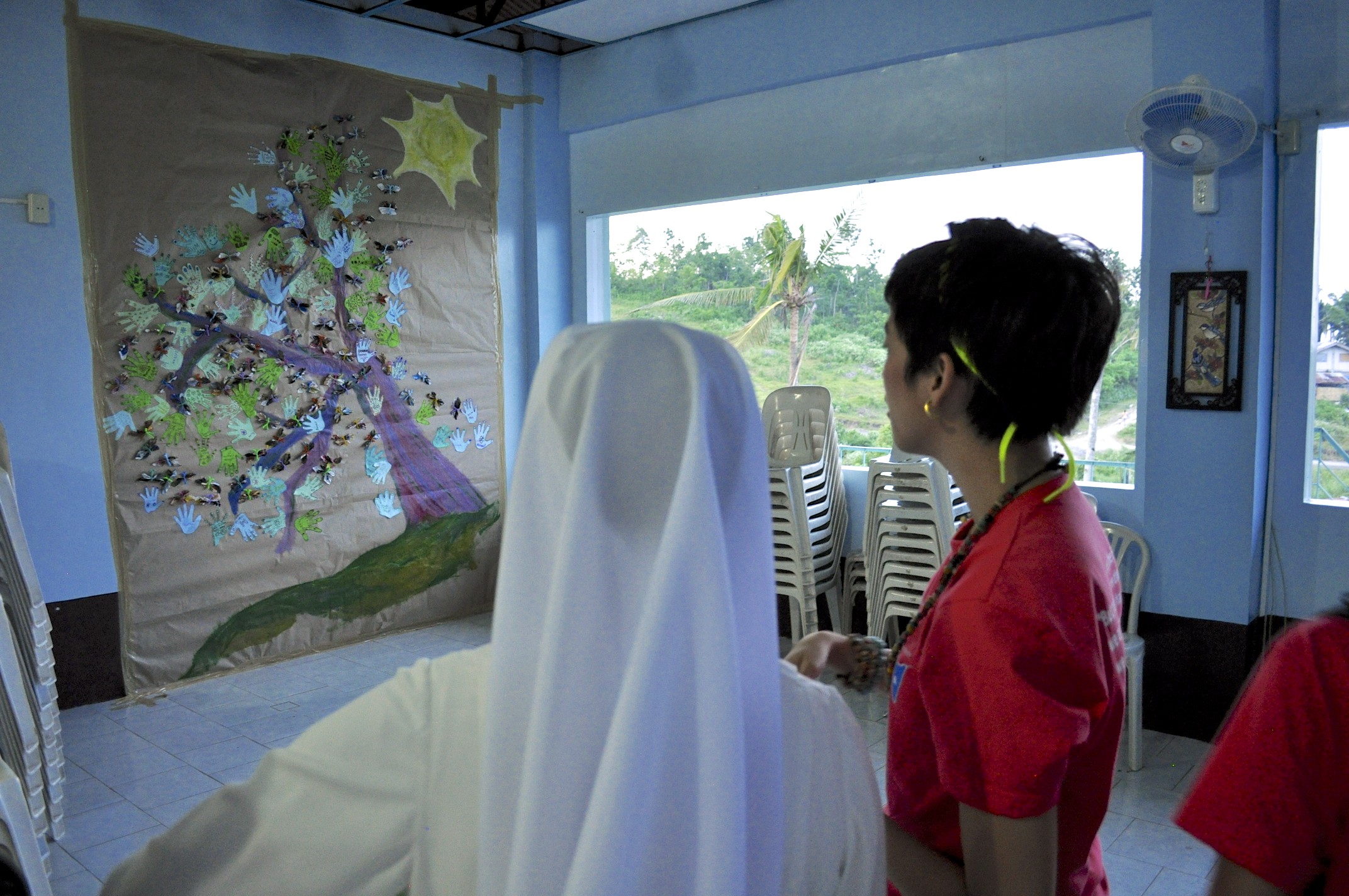
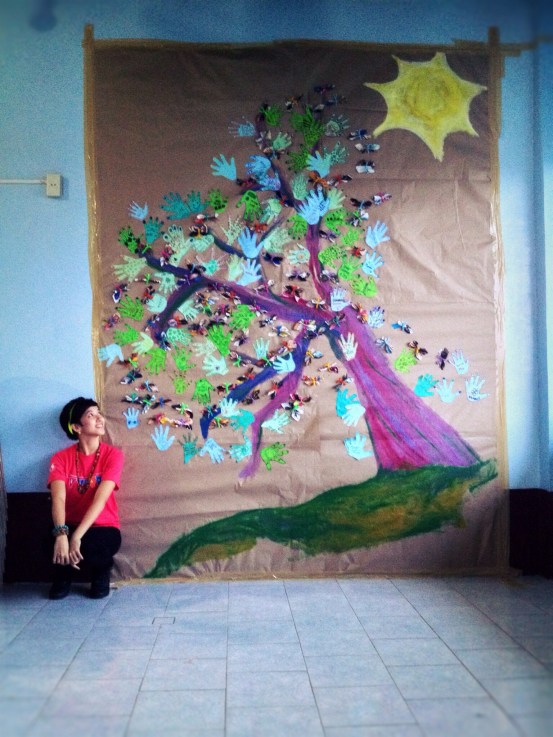
The secondary inspiration was the Buhay Makulay Children’s Fair we held in November 2013, at a girls’ shelter in Marillac Hills. One of the highlights was a mural collage of butterflies made out of recycled magazine paper. I prepared a painting of tree – just trunk and branches. The rest was up to our special guests of the day, the girls of the shelter. We taught them how to make these butterflies, and in the process, to consider the things they are thankful for. Each completed butterfly would represent something for which they give thanks – family, safety, a roof over their heads. As the morning went on, each girl went up to the tree and added their butterfly.

The result was beyond what I had imagined. A breathtaking tree of thanksgiving, from girls recovering from abuse, abandonment or homelessness.

20140128-133259.jpg

So last week, as we quickly planned the Children’s Fair for Capiz, we thought it would be great to bring a similar activity to the kids who experienced the storm. At that time, we hadn’t yet heard about kalachuchi tree story, and had no idea how it would later shape our afternoon with the children.

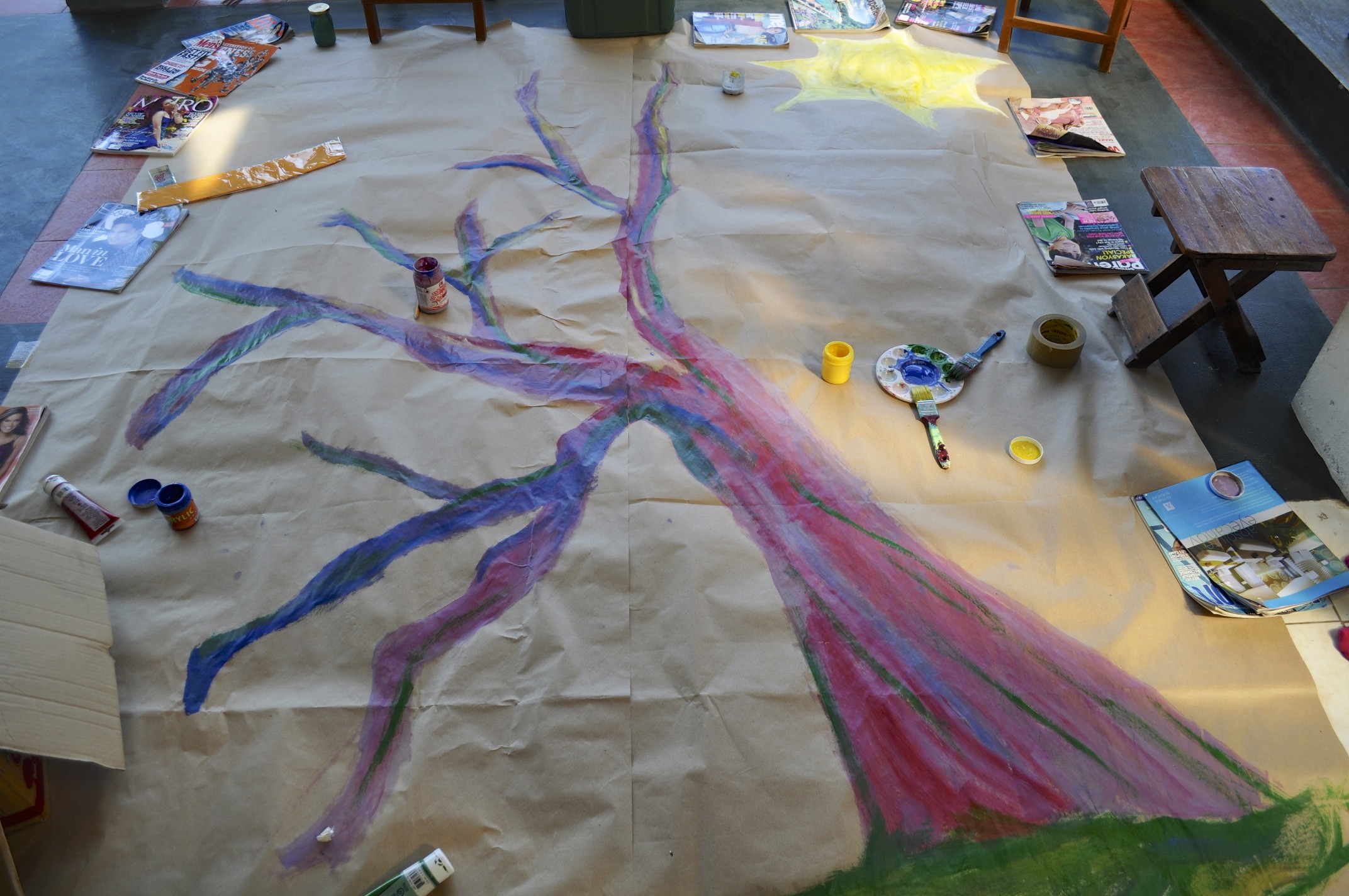
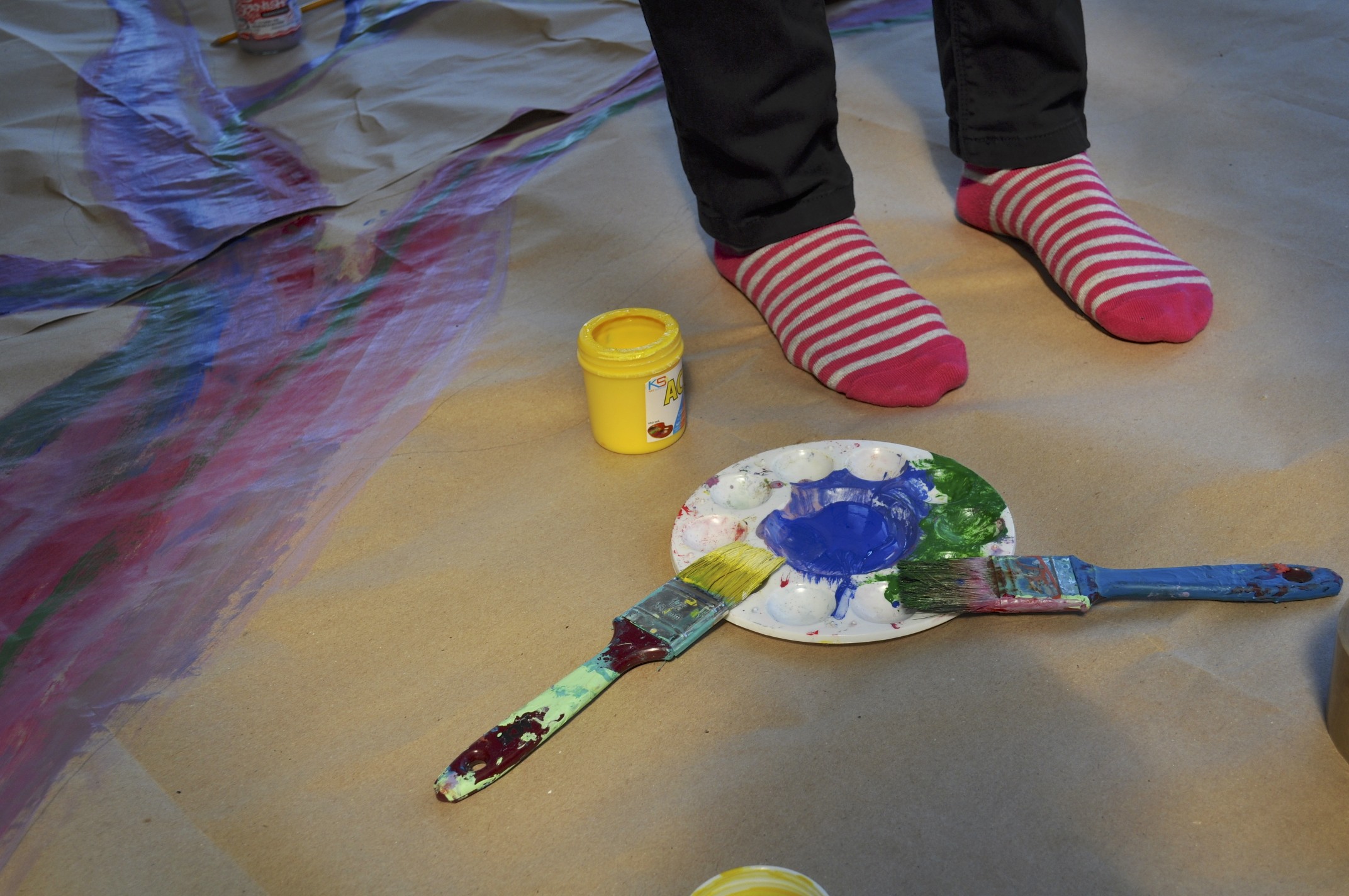
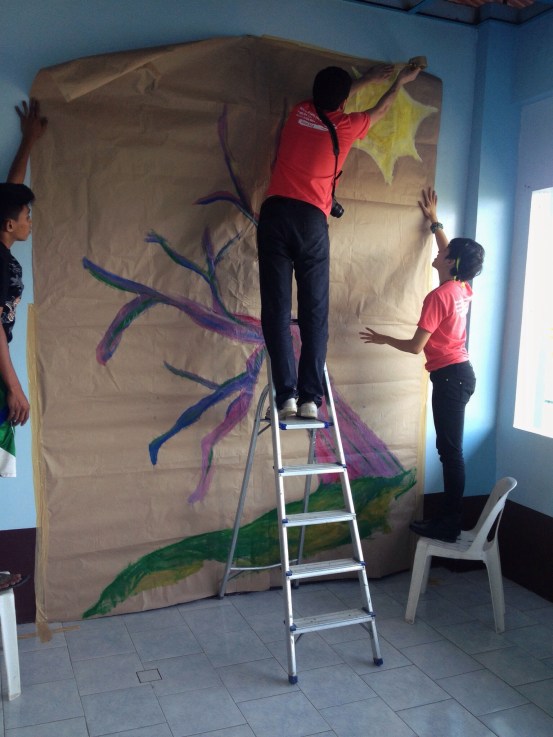
On Friday morning, the day of our fair, I laid out the brown paper on the floor and began to paint a tree. I held down the paper in the strong wind, with jars, magazines and chairs. In my line of sight, the storm-pitched kalachuchi tree.

DSC_0115 DSC_0118

When we put it up on location, it was much larger than I had realized! We were on the third floor and because windows had not yet been replaced from the storm, steady strong winds blew through the space. We were worried the brown paper would tear.

20140128-133212.jpg

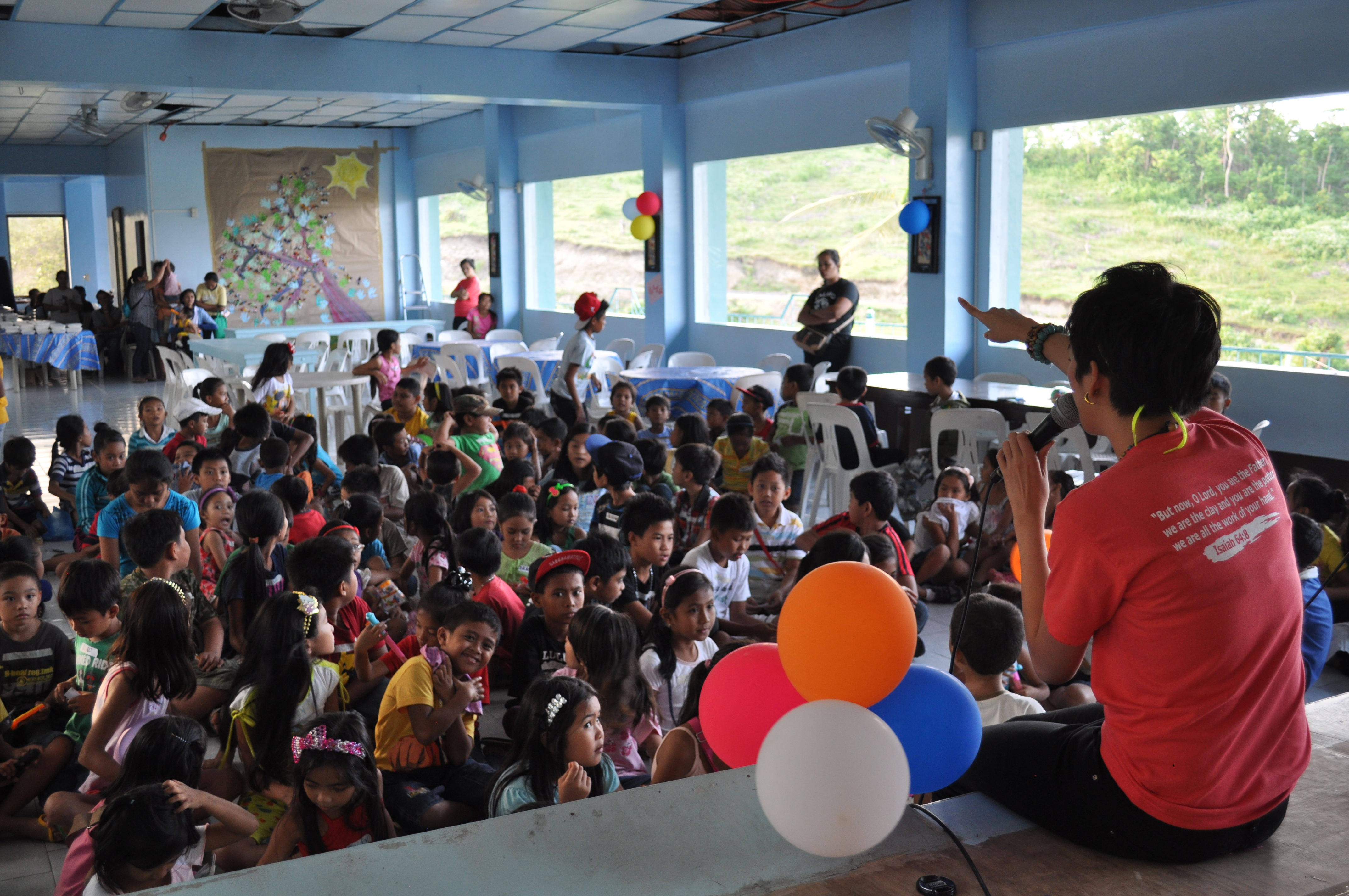
Then came 130 children! All from poor communities surrounding the school we were in. As we started the fair – an afternoon of singing, games and fun crafts, I had a chance to talk to the children. I told them about all the fun we were about to have, but more importantly of the tree that on the far end of the room.

What was missing? I asked them. “Leaves!!” they told me. “Fruit!!” they exclaimed.

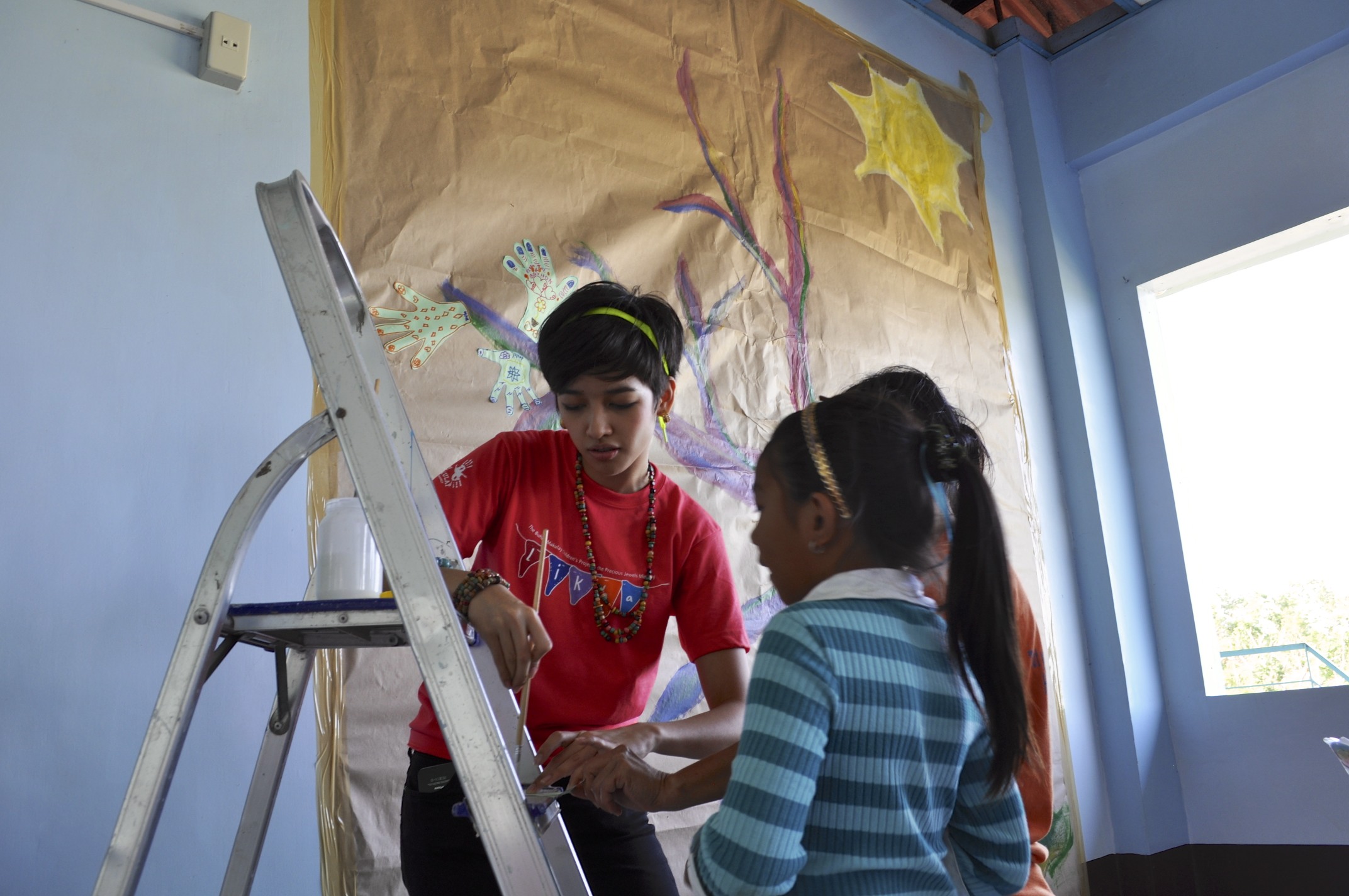
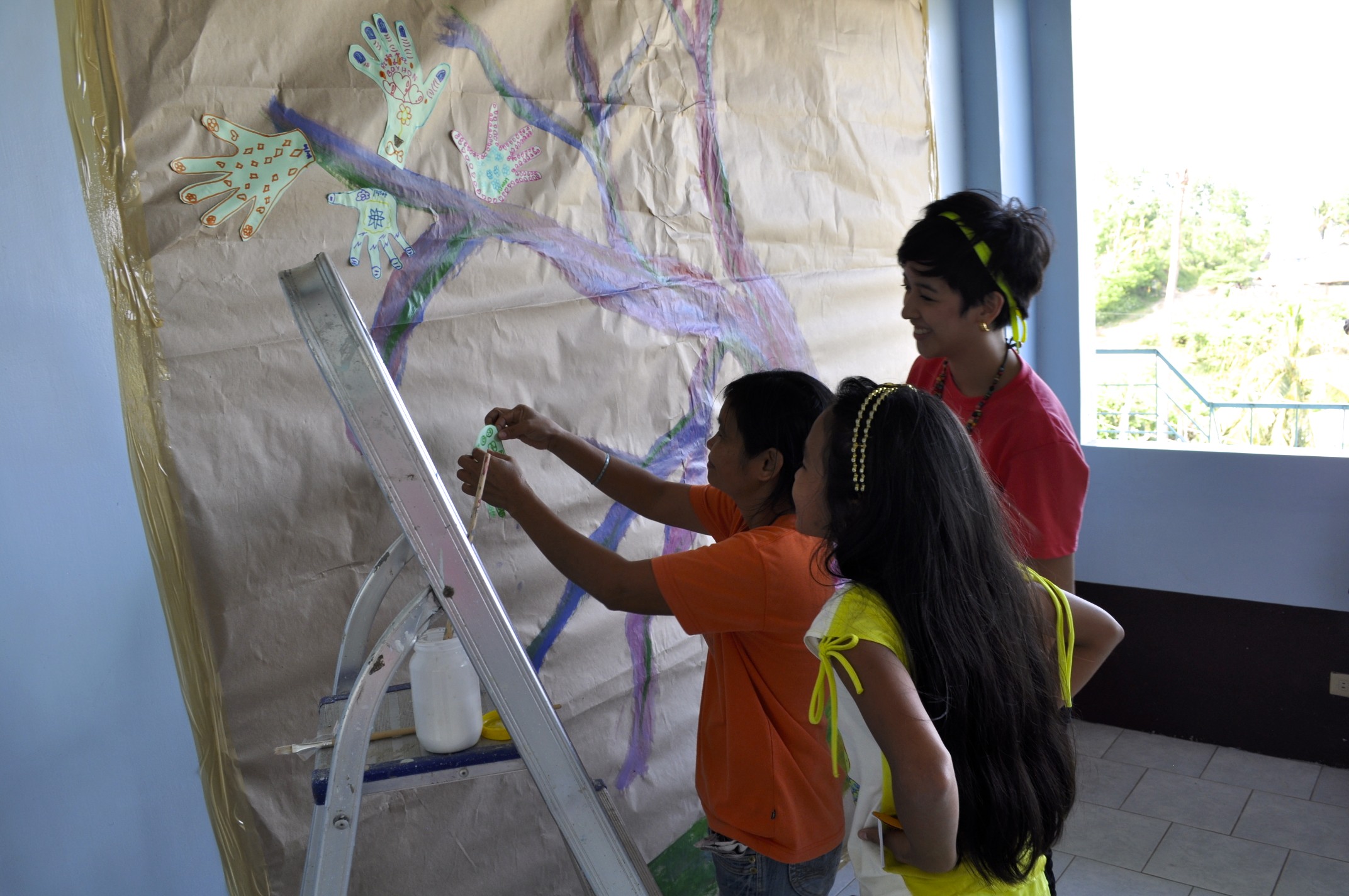
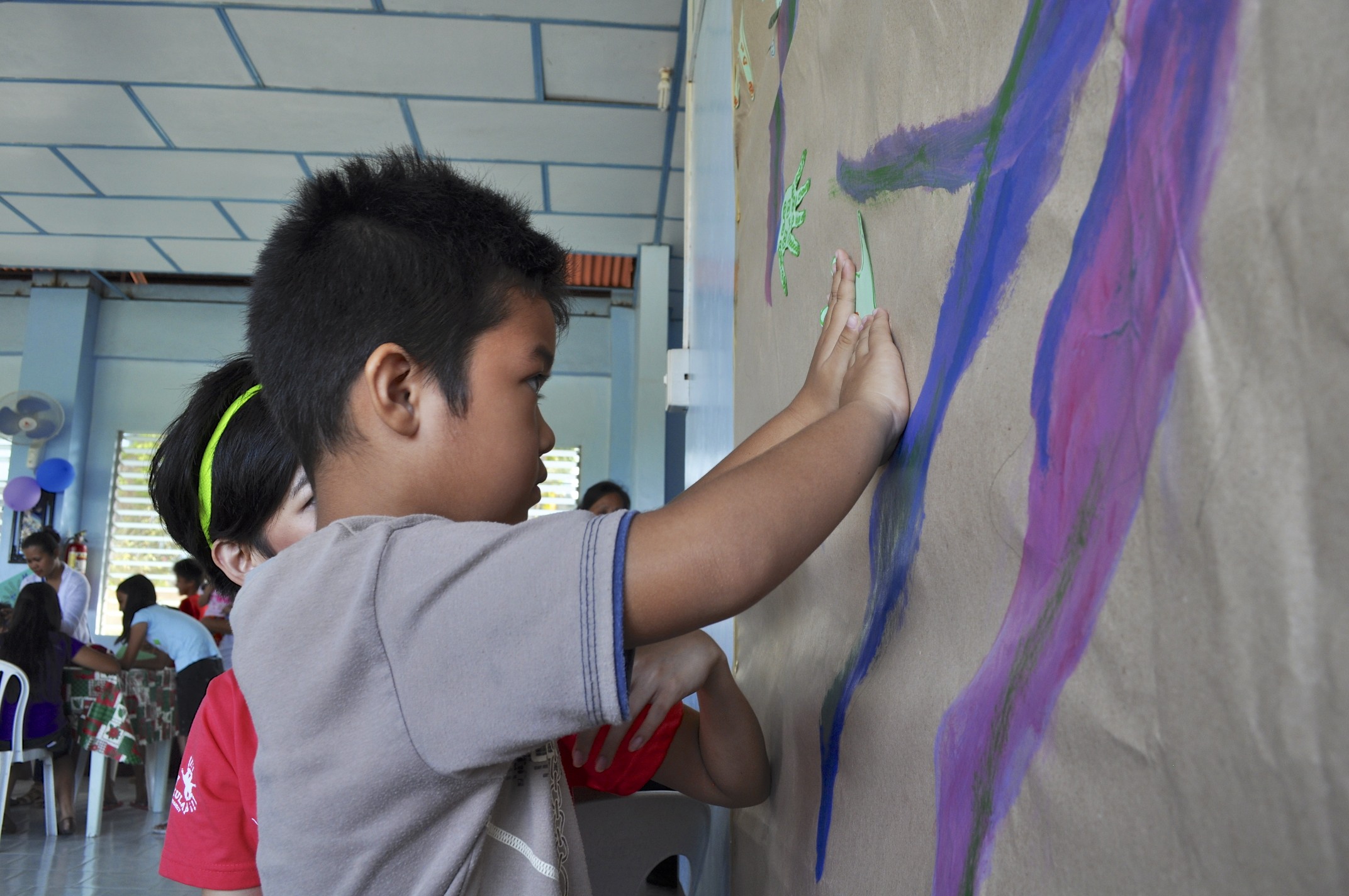
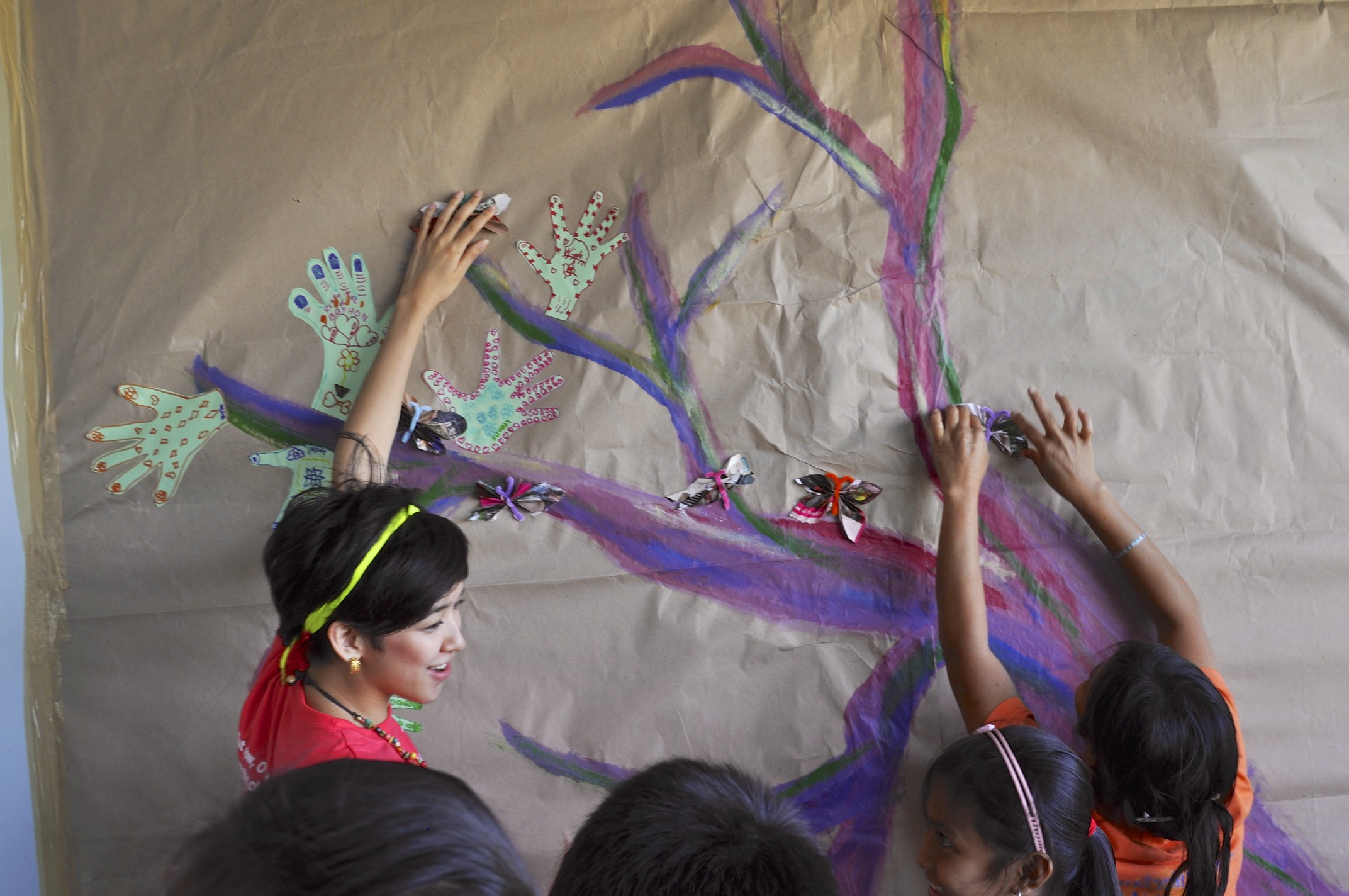
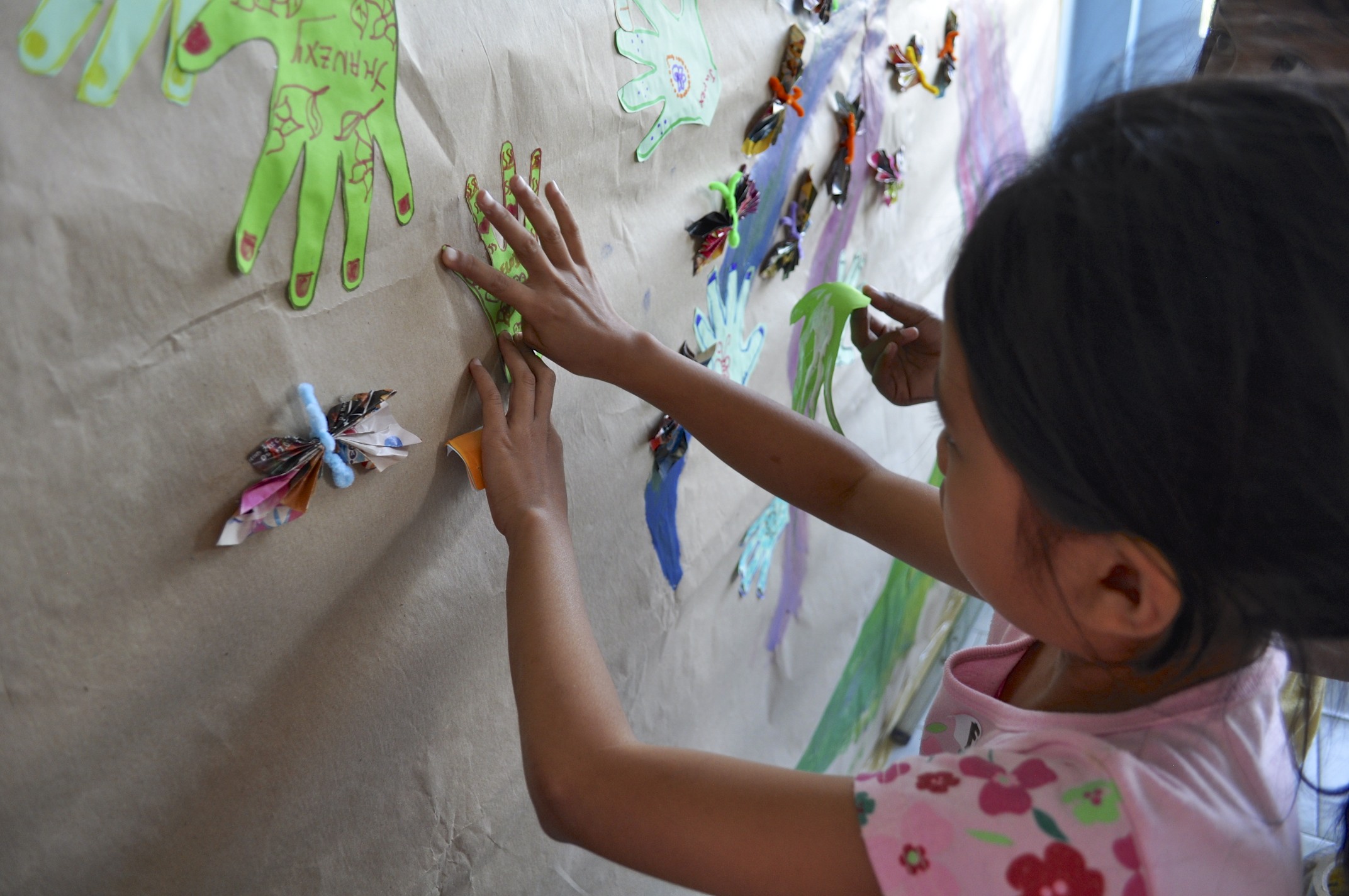
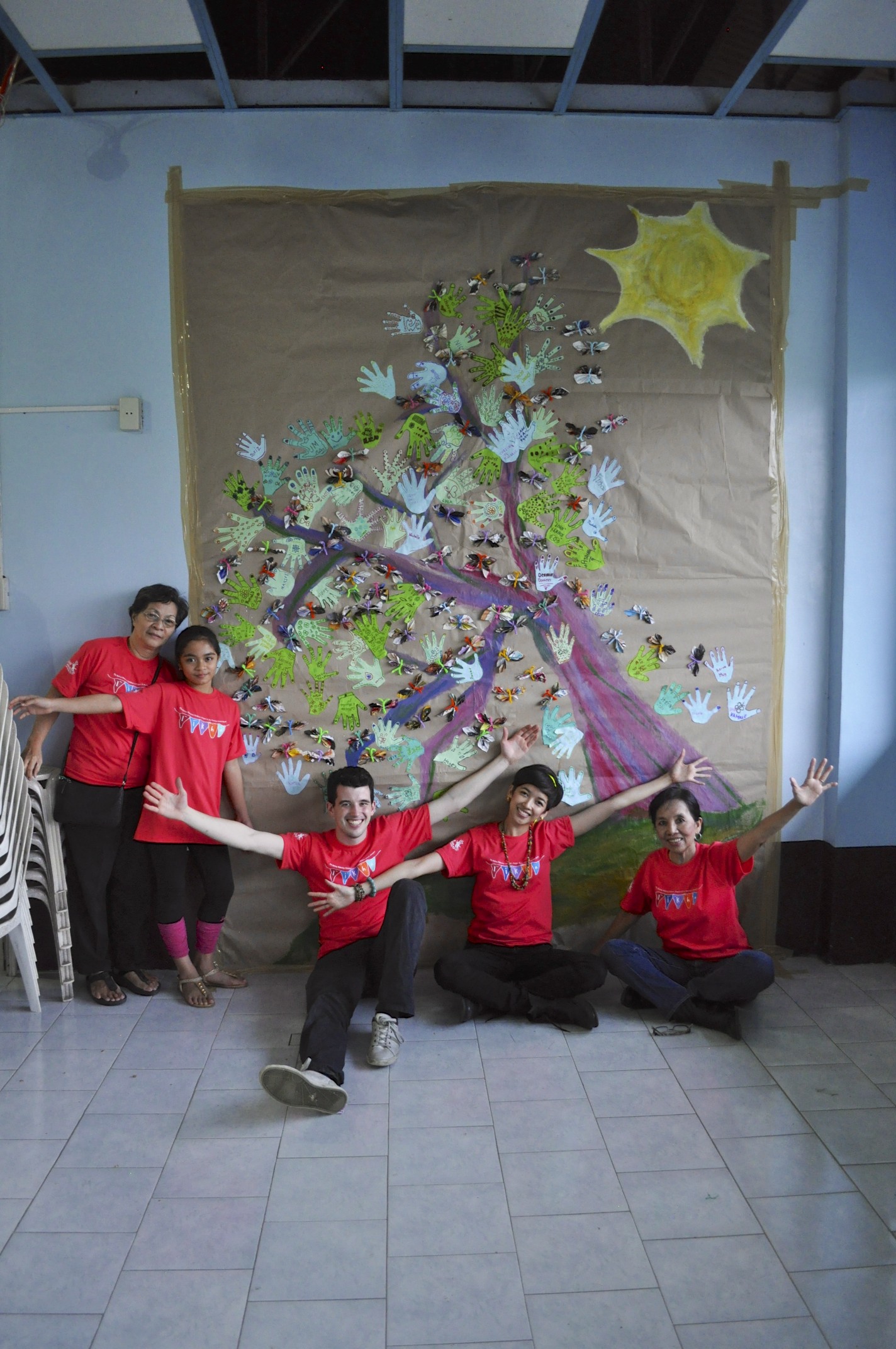
We would have a chance to fill in the missing pieces! They’ll trace their own hands, decorate their handprint and cut it out. Their hands will be the leaves of the tree.

They’ll fold butterflies out of recycled magazine paper and tie them together with pipe cleaners. Their butterflies will be the fruit of the tree.

DSC_0275 DSC_0263

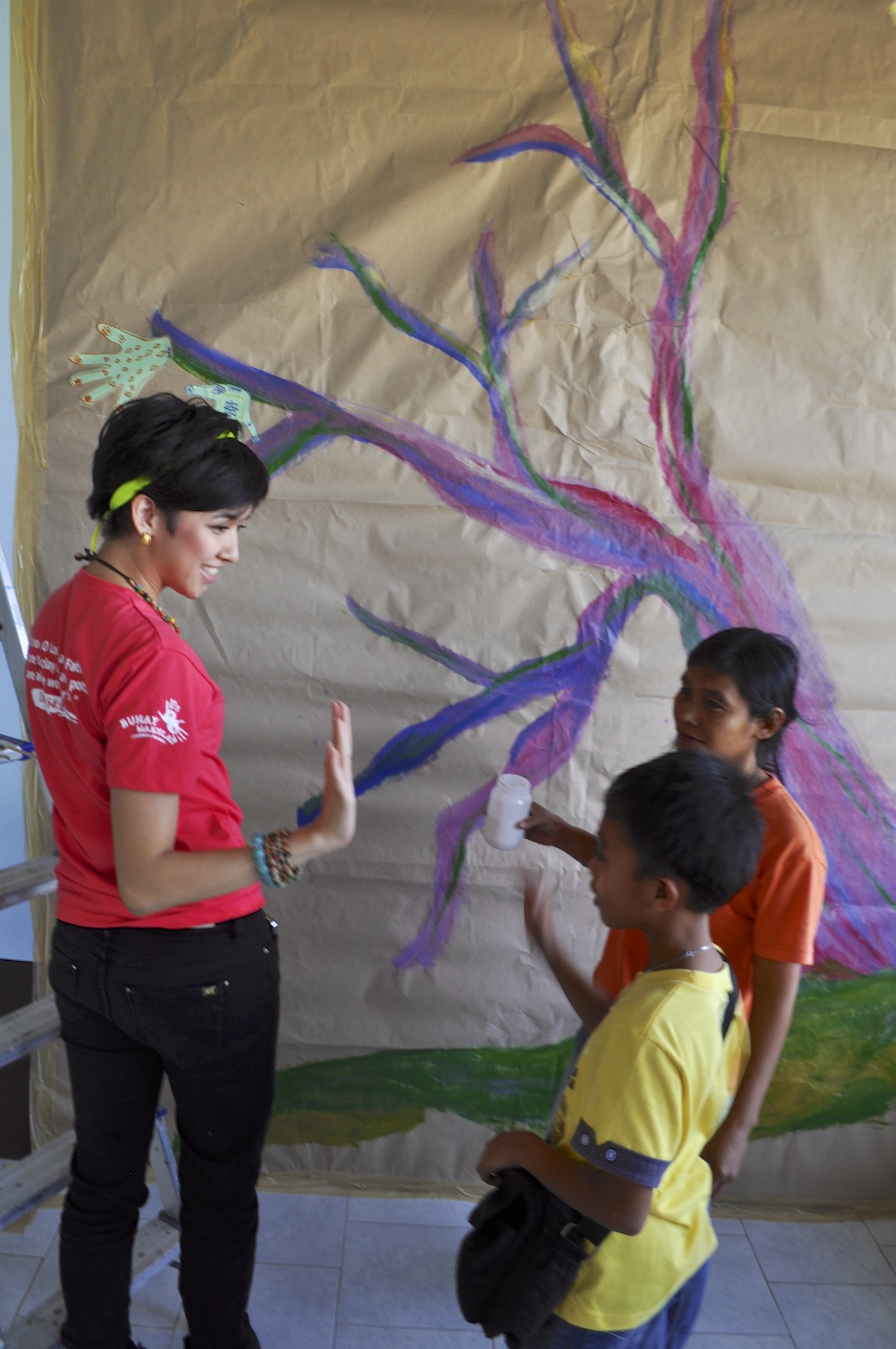
I had the joy of manning the mural station, where kids came up with their finished leaf-hand or butterfly-fruit, ready to add to the tree. They all came shyly forward, craft in hand. Some were too shy to paint on the glue themselves and even more embarrassed to glue it on the collage on their own. After putting their work up, I would give them high fives which would stir up their smiles. Others had scuttled away before I could turn around to face them from the collage!

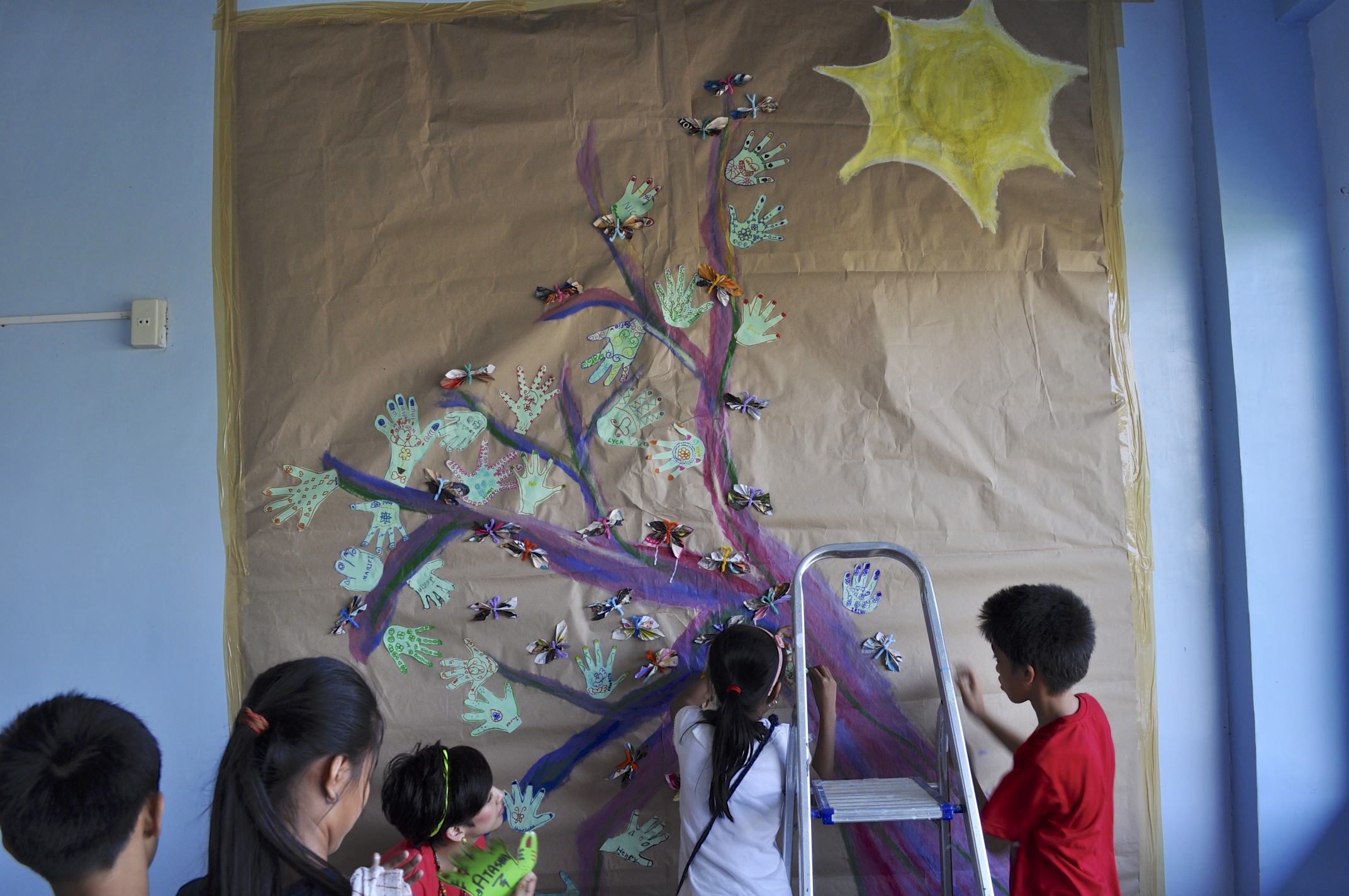
At the end of the day, we had a tree full of life and hope!

DSC_0227 DSC_0293 DSC_0343 DSC_0295 DSC_0353 DSC_0356 DSC_0357 DSC_0364 DSC_0369

Before dinner, we gathered them and told the story of the tree’s inspiration.

Much of their world is now changed because of the storm. These kids may not have lost family, but they have lost food supply, a parent’s livelihood, a room, a roof, their whole home, or electrical power. We drew their attention to our own tree in the room.

Nothing more was missing! Their own hands and fruit have filled in the space.

DSC_0393

Look at our tree! It may be leaning over, still bearing the weight of a historically catastrophic storm, but despite that, their is hope blooming.

Just like the kalachuchi tree who shared new green in just two days, new fruit can be born of life that has been tackled down.

Today, after the storm, perhaps we can see the tilt as beautiful and in time even find that the tree, and we, have grown stronger.

DSC_0470 DSC_046120140128-133224.jpg

Love and special thanks to the Conlu family, the Grand Gazebo in Baybay beach, Our Mother of Mercy Learning School Inc., and the Sister Servants of the Poor in Lawaan Capiz.

Buhay Makulay 004: Children’s Fair for Typhoon-Hit Capiz

The Buhay Makulay Children’s Fair has made it from public hospital to government shelter in Metro Manila in the seven years since we started it. We step out tomorrow and bring the fair to the mountain area of Lawaan in Capiz, a region affected by typhoon Haiyan/Yolanda. Hosted at local school run by nuns, our head count has jumped quickly from 100 kids, to 115, to the latest count at 122.

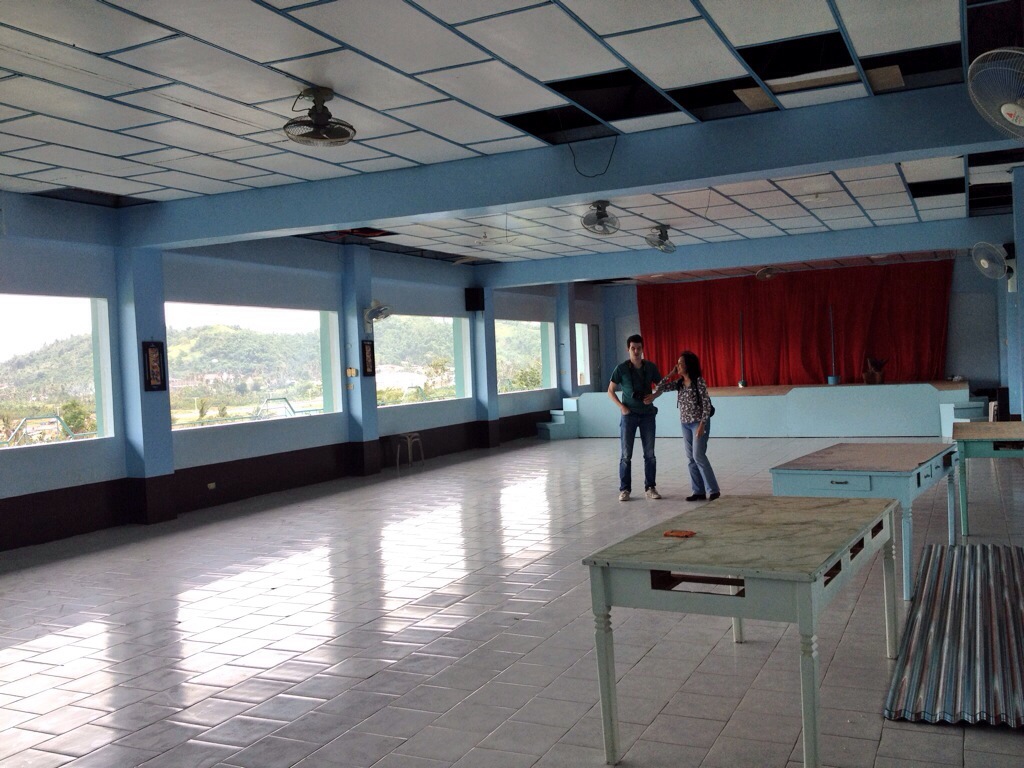
Today we visited the site, not knowing what to expect. We met the sweet nuns and witnessed the school marching band at practice in the schoolyard. When we were led up to the hall on the third floor, we were quickly convinced that it would be the best place for the fair. There’s enough space to accommodate and manage a large crowd of kids; while the large windows and great view also give a wonderful sense of openness. It will be perfect.

But let’s see how we feel when there’s 122 energized bodies running around and making noise in the large hall!

20140123-221325.jpg

The process of restoration on this island will take years, but we’re hoping our afternoon of singing, games, crafts and affirming hope will be a memorable hint of the brighter things yet to come to them.