Haiyan/Yolanda 003: Hope From the Storm-Tackled Kalachuchi Tree

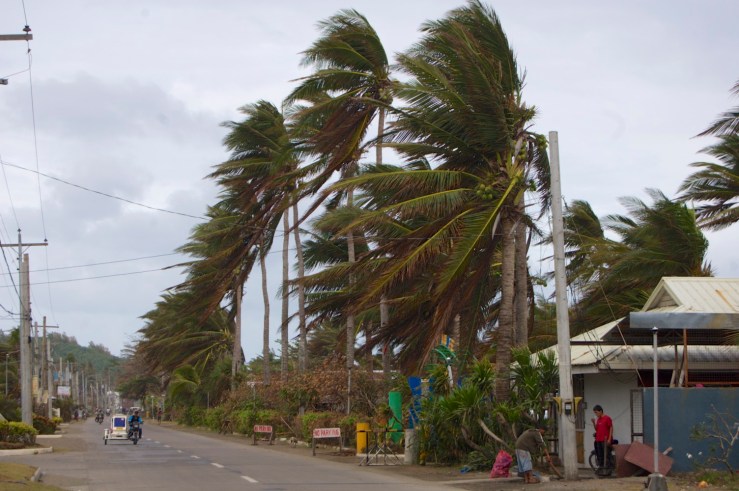
Today, the trees are forever blowing in one direction near the shore of Capiz. Ever since the super typhoon hit in November, all their branches sling away from the sea. Like a cartoon character’s long hair when someone yells in their face, or when it’s been electrocuted. But the trees aren’t cartoons, and Yolanda wasn’t playing around when she howled at the Philippines.
DSC_0925

Sustained winds were reported at at 195 mph, with gusts reaching even 235. Internationally called Haiyan, the storm was locally known as Yolanda. In Roxas City, Capiz – glass shattered, signage torn off buildings, roofs whipped clear off their structures. Yolanda left a mess.

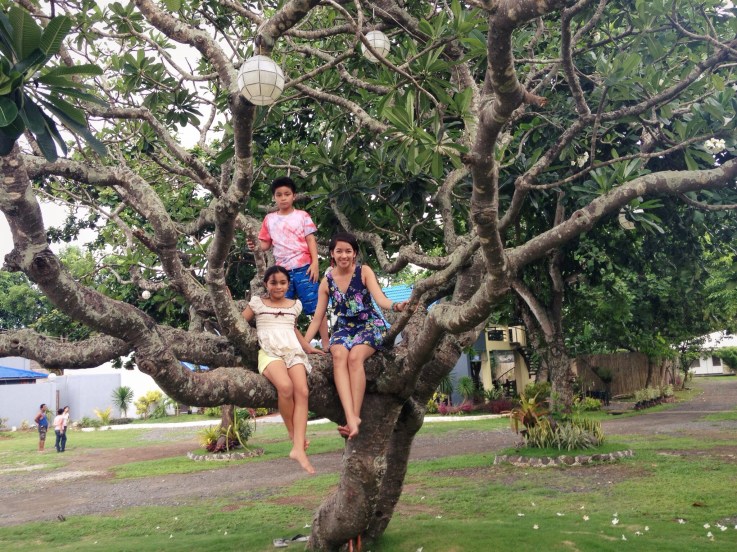
In June last year I climbed a kalachuchi tree in our friend’s front yard in Roxas City. The kids, Carrie and Iggy, showed me the tree, and did tricks as I watched from a branch. It was a beautiful and strong tree.20140128-133054.jpg
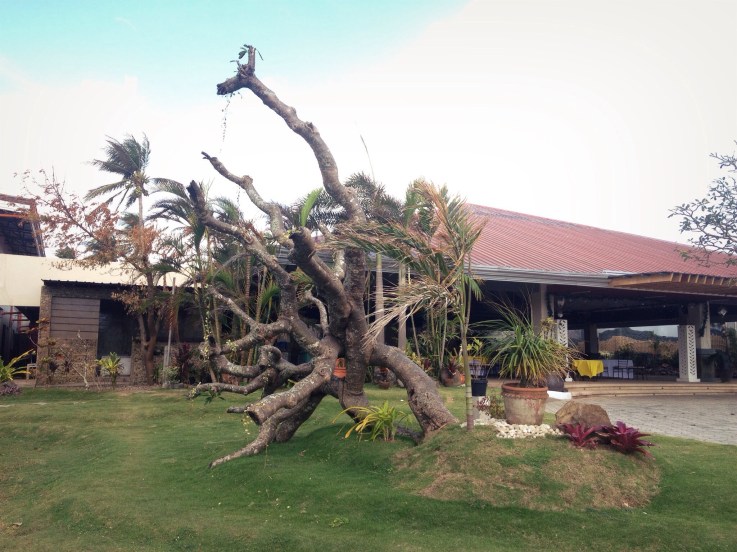
After Yolanda, this same kalachuchi tree now tilts, bowing away from shore, toward the mountain. It’s roots held on in the howling wind that brought down shanties, nipa huts, electric posts and uprooted many other old trees. Instead of helping the kalachuchi tree upright as they thought they might, our friends decided to let it grow as it was, now leaning at an angle.

Two days later, in the storm’s wake, new green sprouted on the kalachuchi tree! The comfort of new life to come. This tree became the inspiration for the art we made with the children of  Capiz.
20140128-133203.jpg

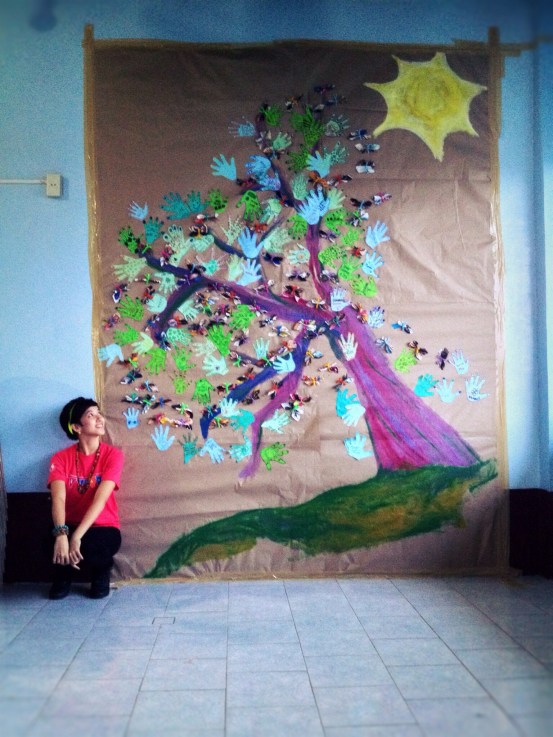
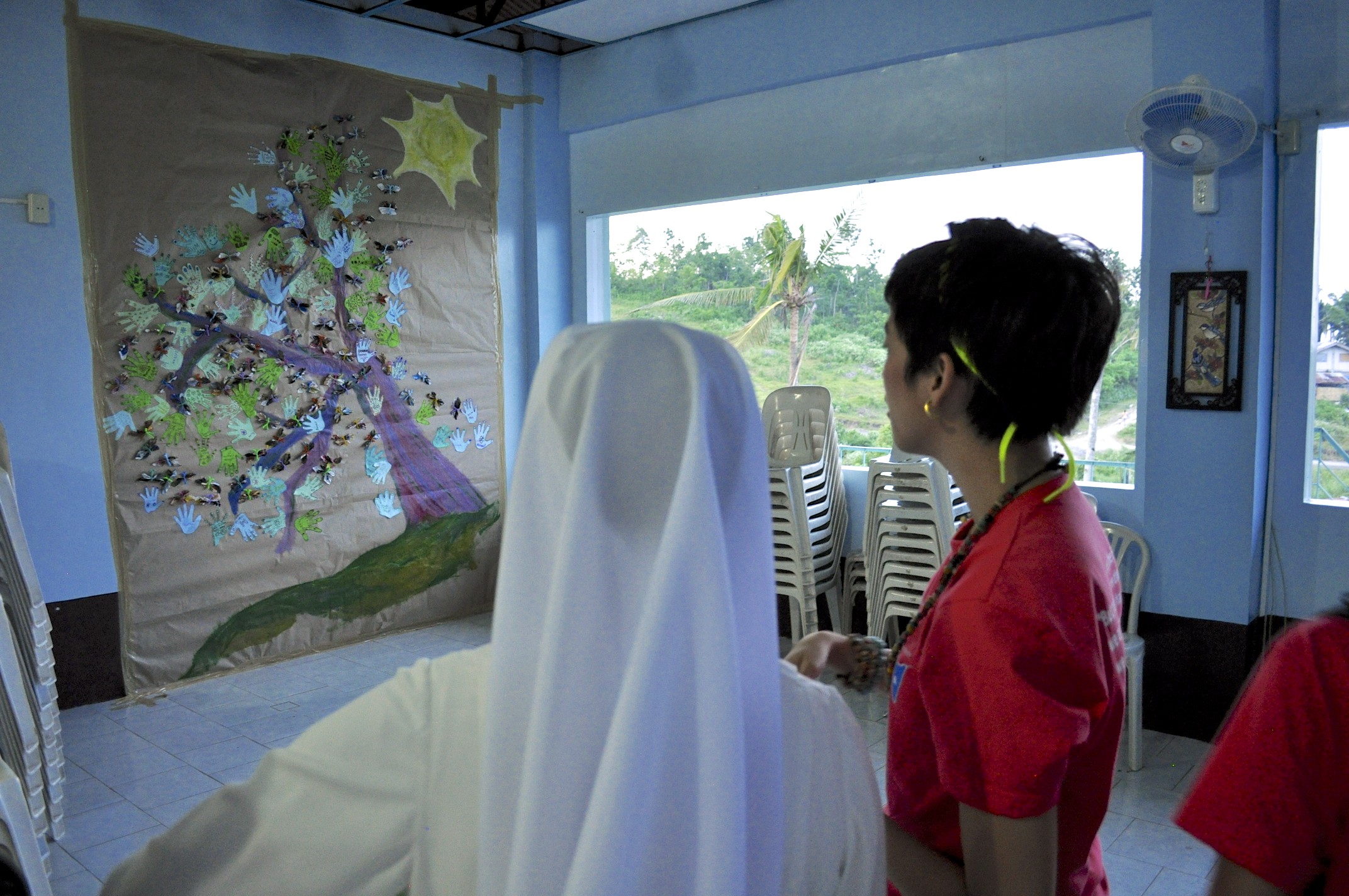
The secondary inspiration was the Buhay Makulay Children’s Fair we held in November 2013, at a girls’ shelter in Marillac Hills. One of the highlights was a mural collage of butterflies made out of recycled magazine paper. I prepared a painting of tree – just trunk and branches. The rest was up to our special guests of the day, the girls of the shelter. We taught them how to make these butterflies, and in the process, to consider the things they are thankful for. Each completed butterfly would represent something for which they give thanks – family, safety, a roof over their heads. As the morning went on, each girl went up to the tree and added their butterfly.

The result was beyond what I had imagined. A breathtaking tree of thanksgiving, from girls recovering from abuse, abandonment or homelessness.
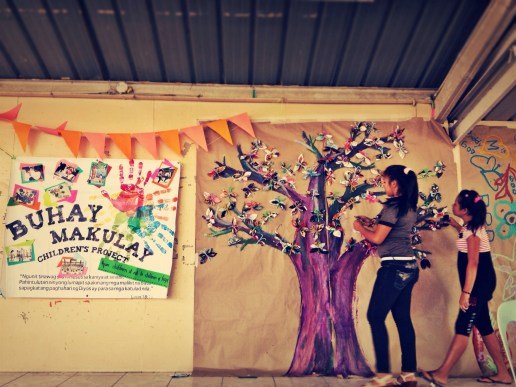
20140128-133259.jpg

So last week, as we quickly planned the Children’s Fair for Capiz, we thought it would be great to bring a similar activity to the kids who experienced the storm. At that time, we hadn’t yet heard about kalachuchi tree story, and had no idea how it would later shape our afternoon with the children.

On Friday morning, the day of our fair, I laid out the brown paper on the floor and began to paint a tree. I held down the paper in the strong wind, with jars, magazines and chairs. In my line of sight, the storm-pitched kalachuchi tree.
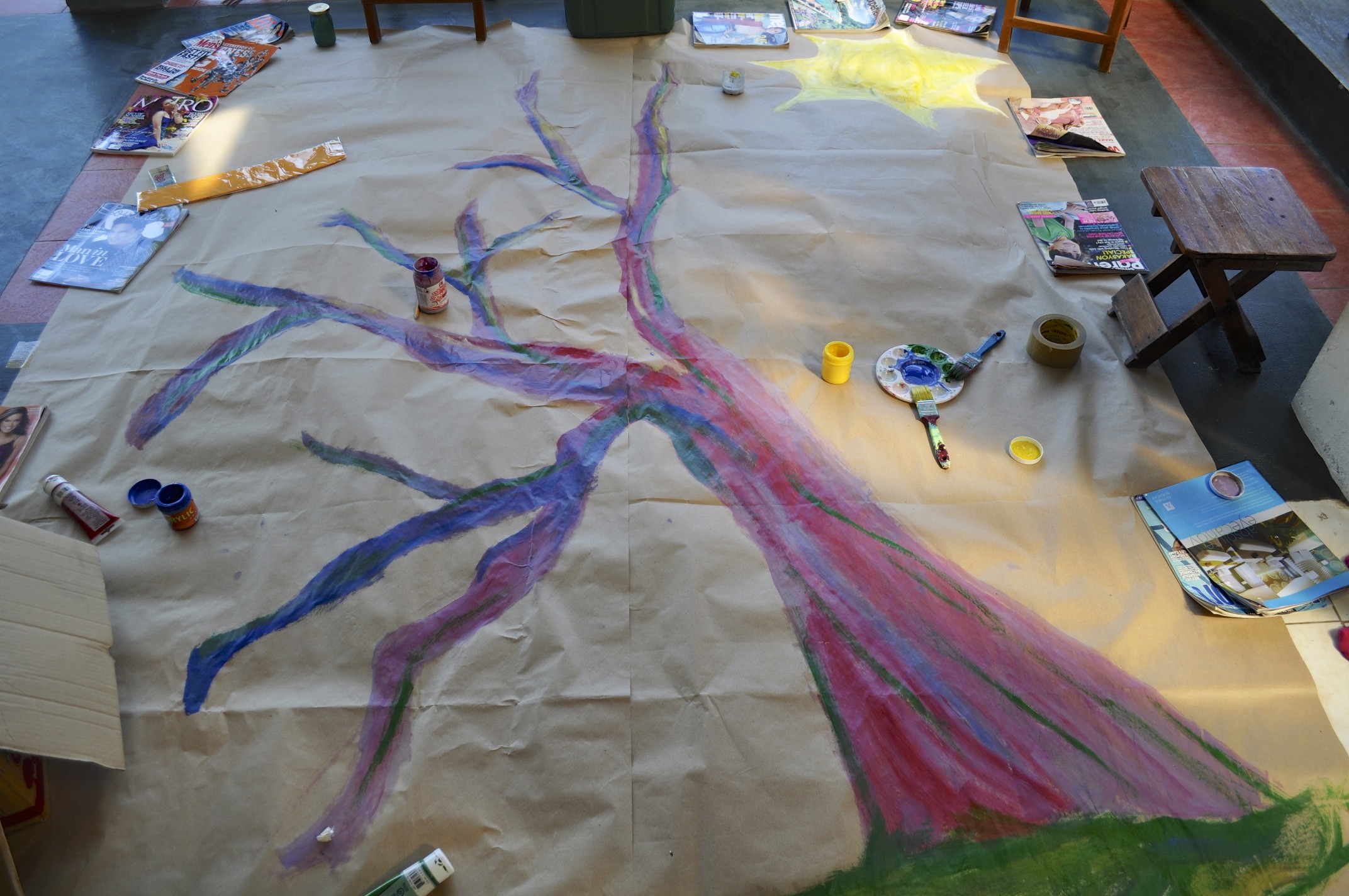
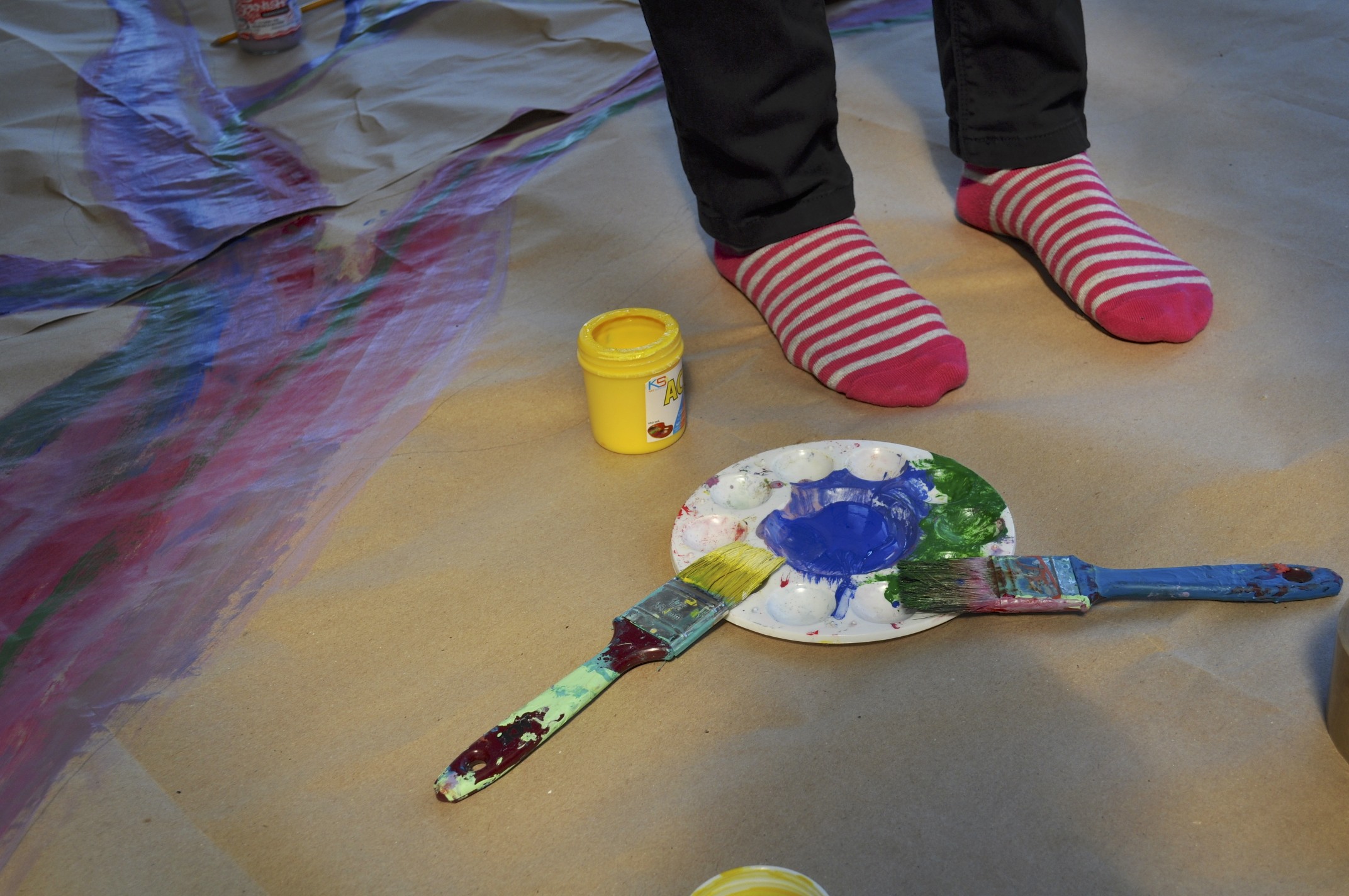
DSC_0115 DSC_0118

When we put it up on location, it was much larger than I had realized! We were on the third floor and because windows had not yet been replaced from the storm, steady strong winds blew through the space. We were worried the brown paper would tear.
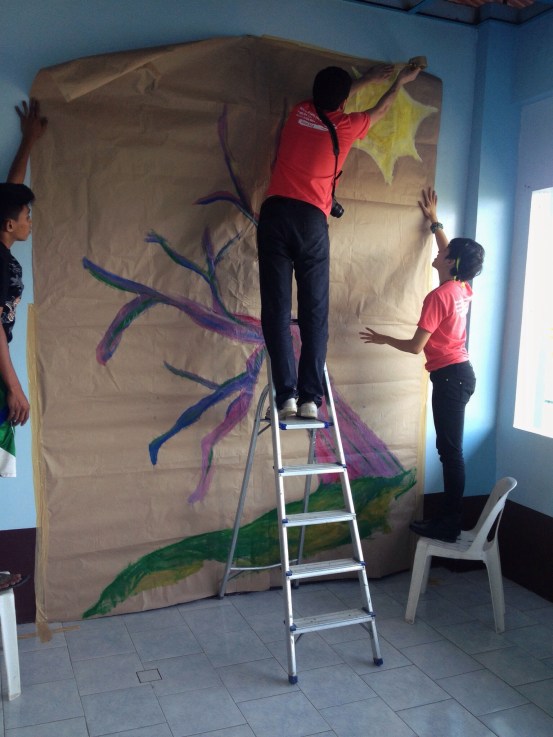
20140128-133212.jpg

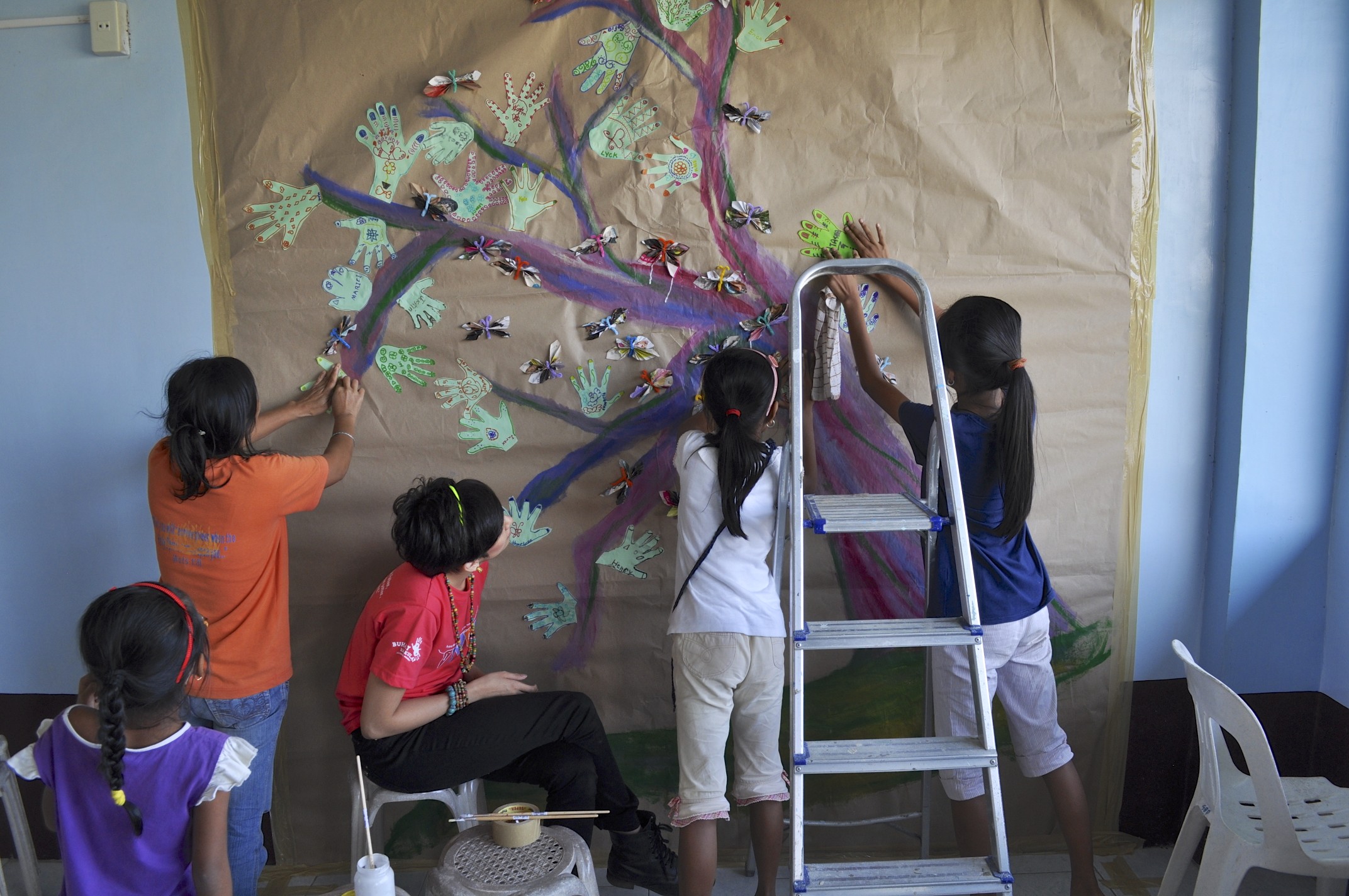
Then came 130 children! All from poor communities surrounding the school we were in. As we started the fair – an afternoon of singing, games and fun crafts, I had a chance to talk to the children. I told them about all the fun we were about to have, but more importantly of the tree that on the far end of the room.

What was missing? I asked them. “Leaves!!” they told me. “Fruit!!” they exclaimed.

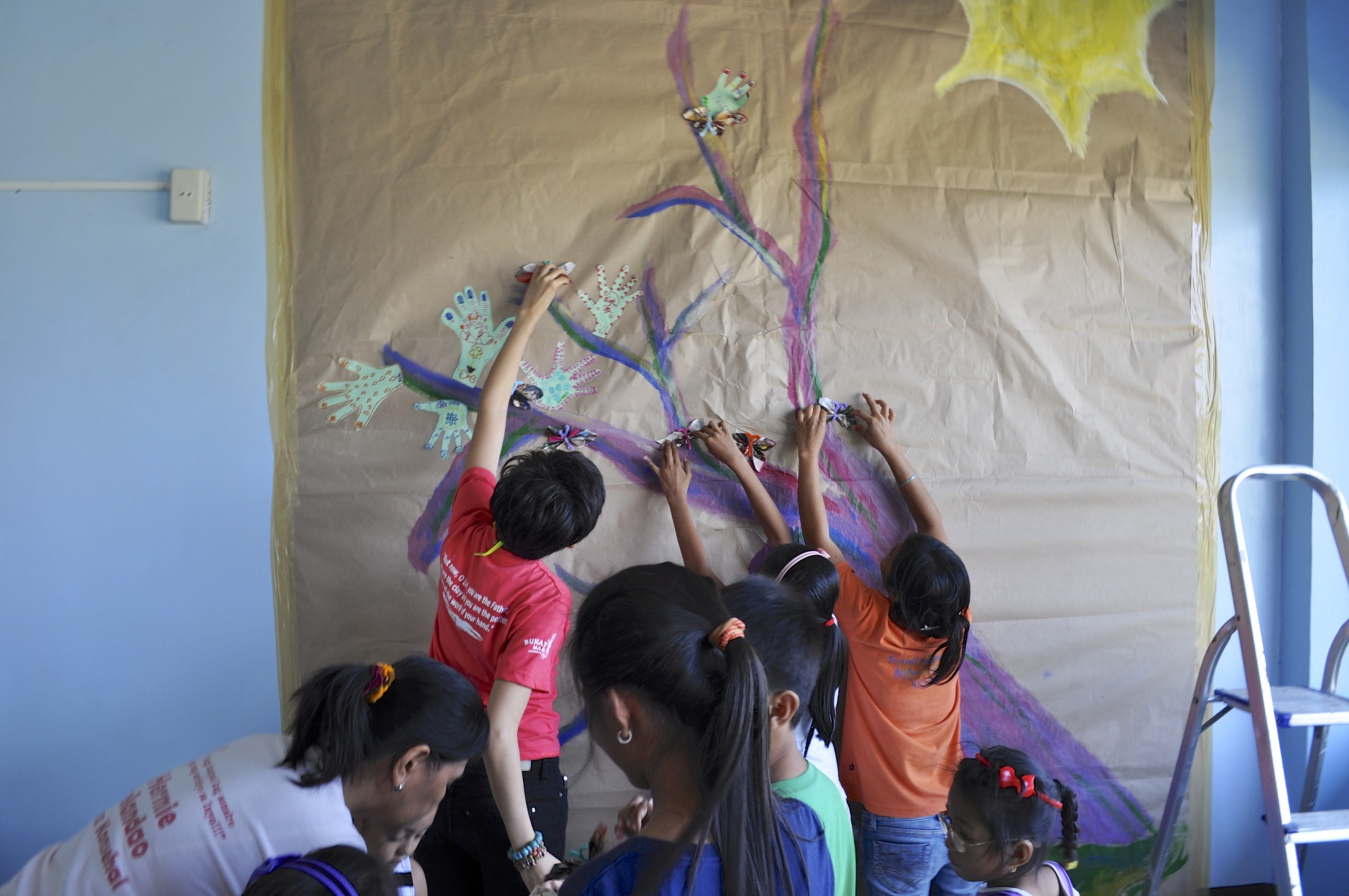
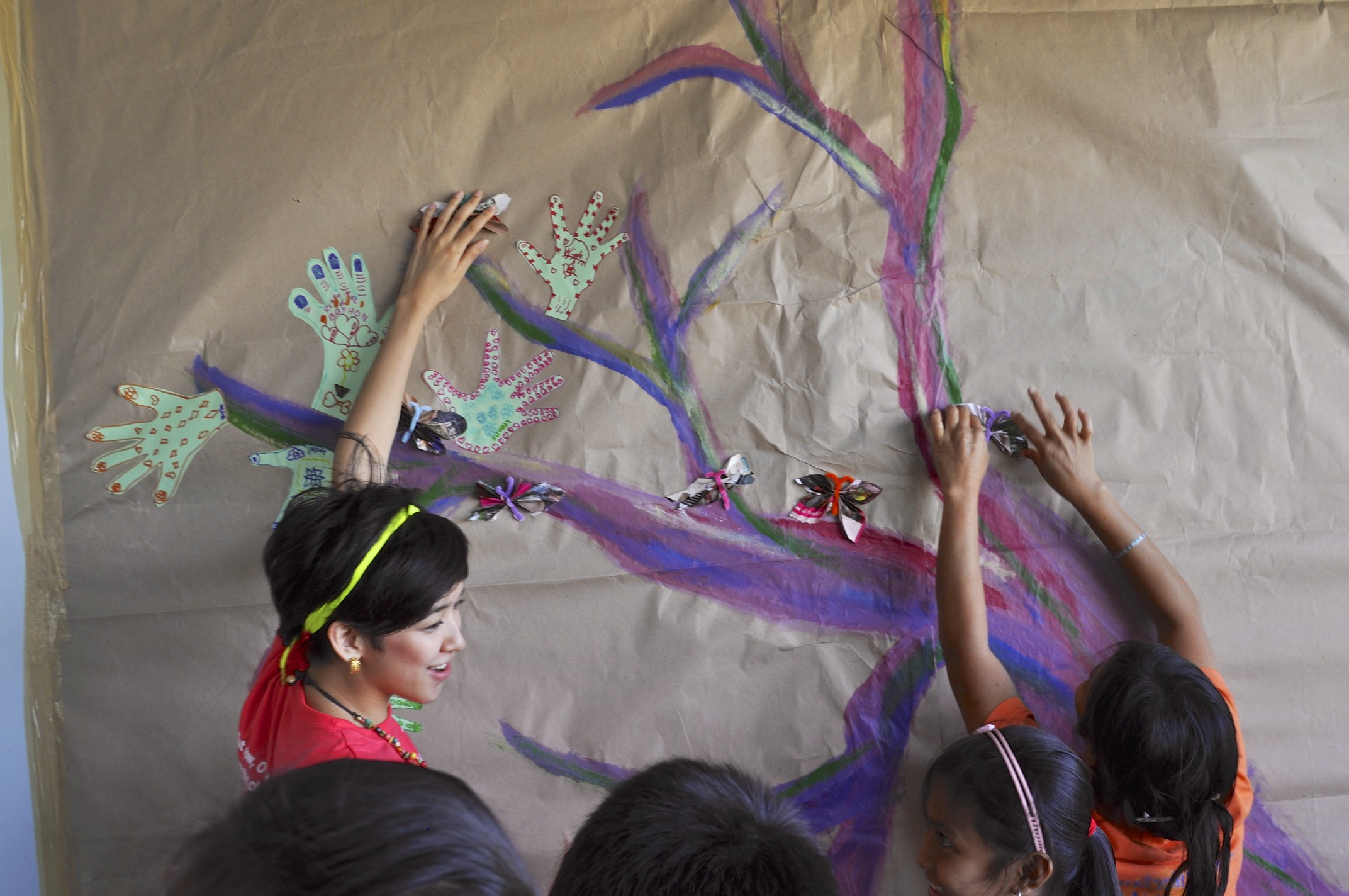
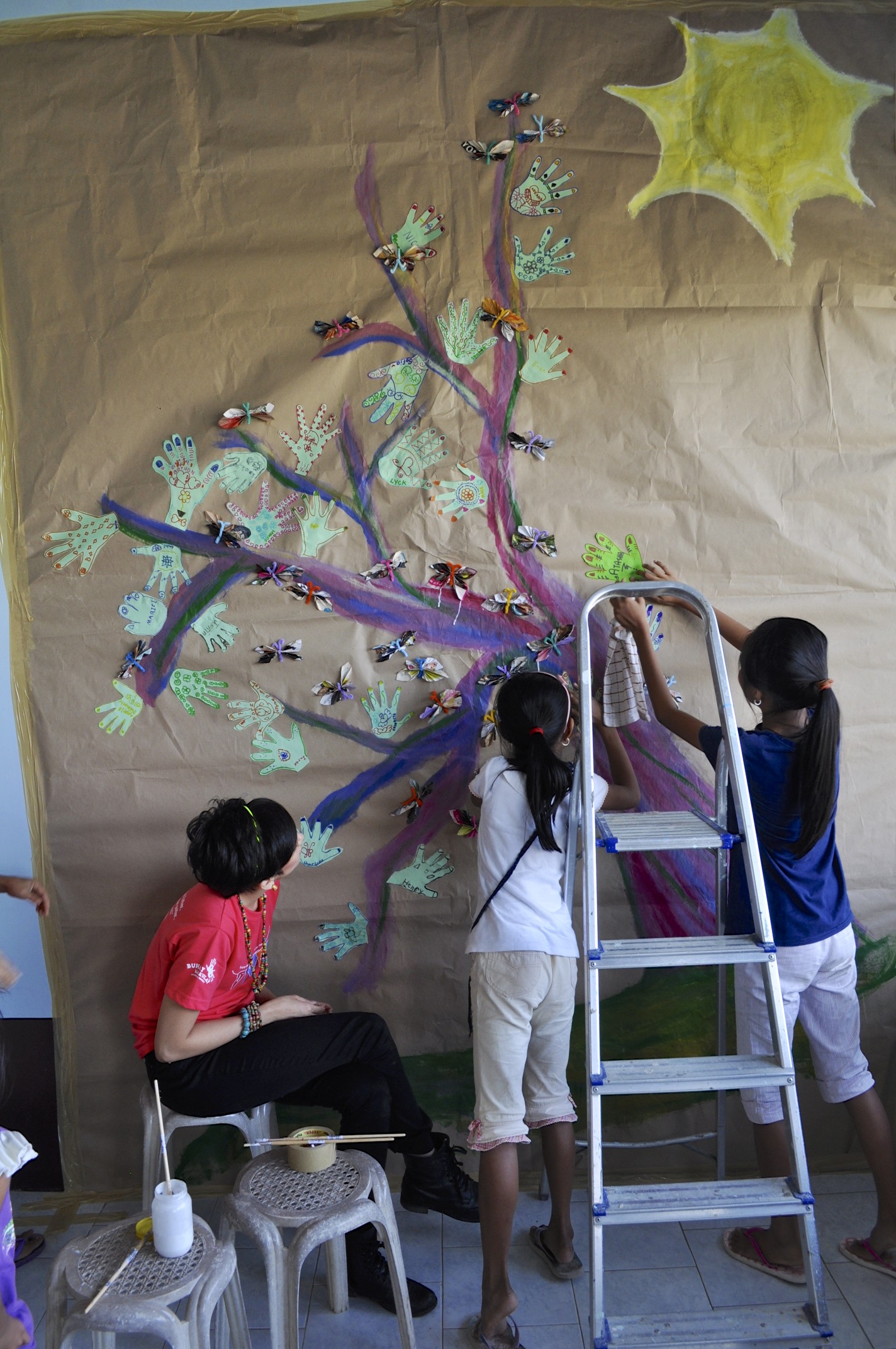
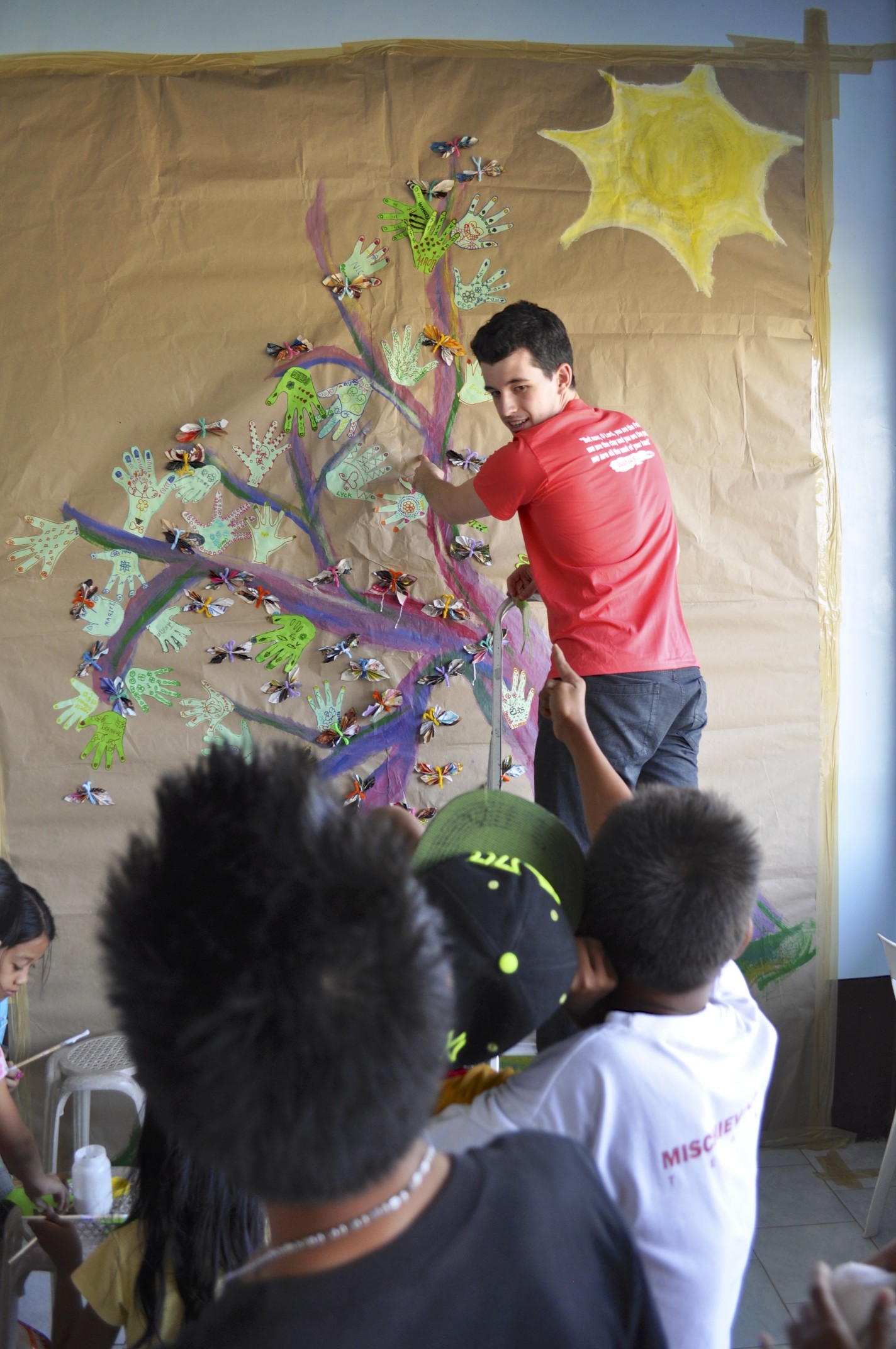
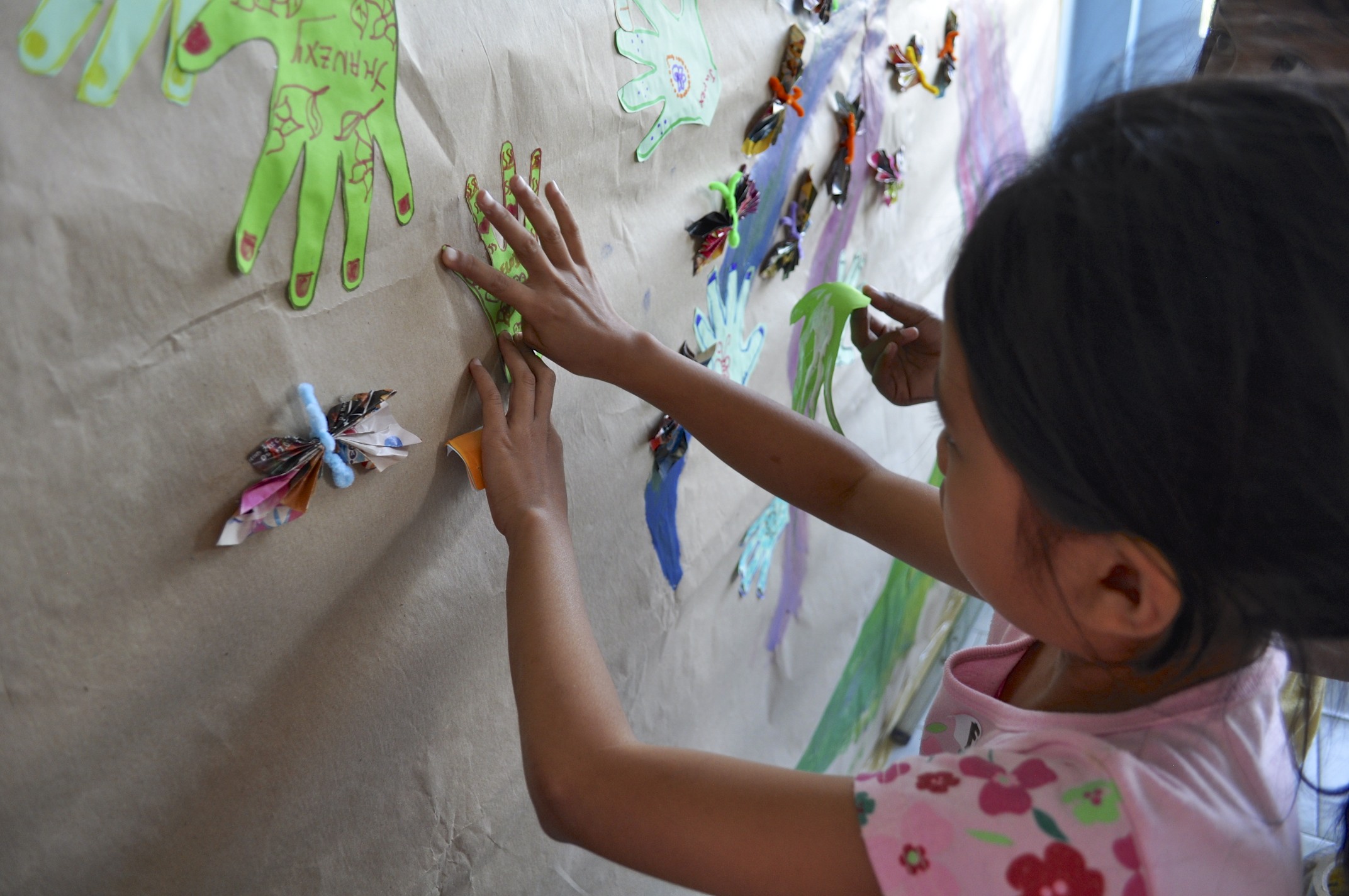
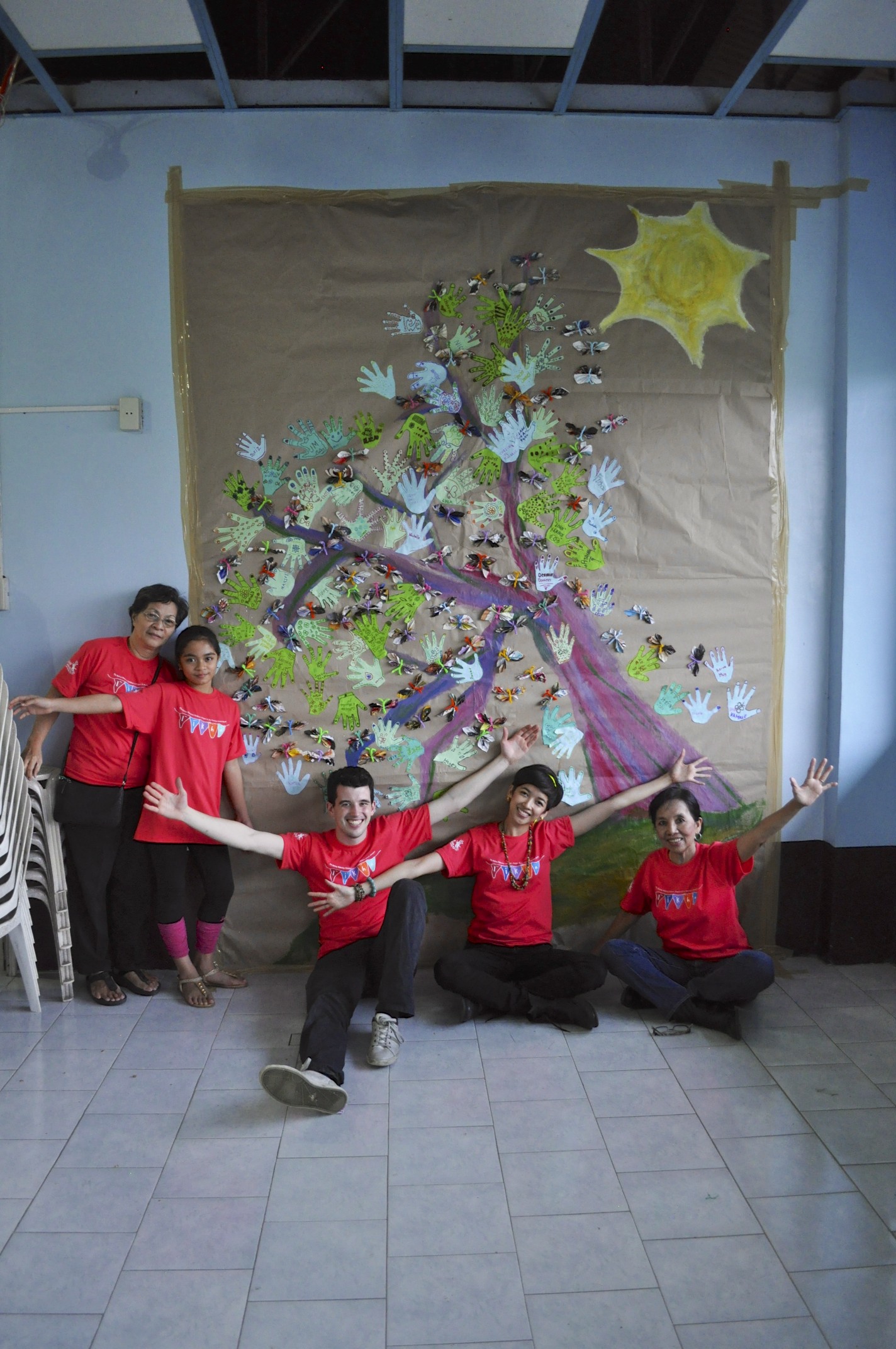
We would have a chance to fill in the missing pieces! They’ll trace their own hands, decorate their handprint and cut it out. Their hands will be the leaves of the tree.

They’ll fold butterflies out of recycled magazine paper and tie them together with pipe cleaners. Their butterflies will be the fruit of the tree.
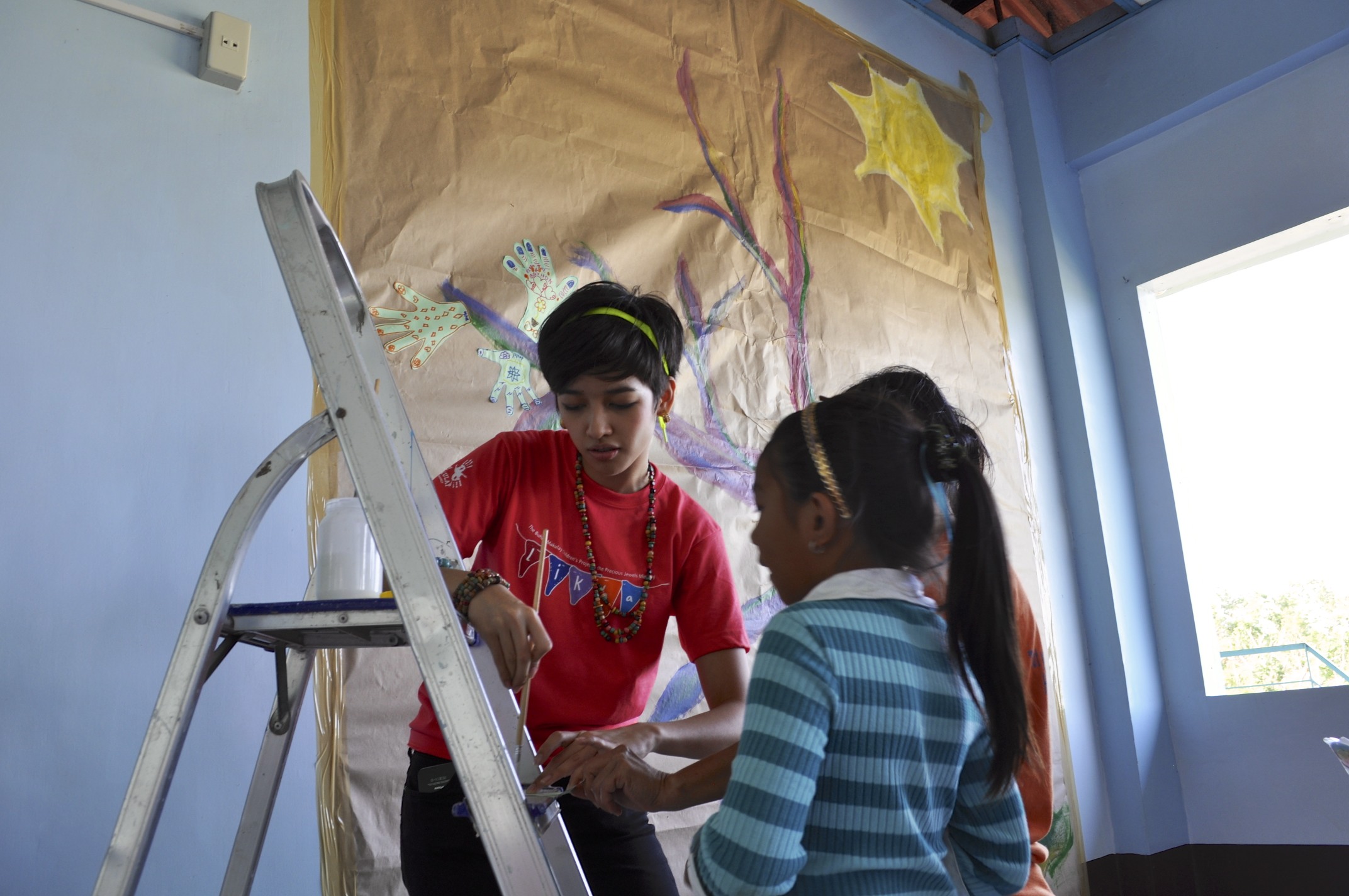
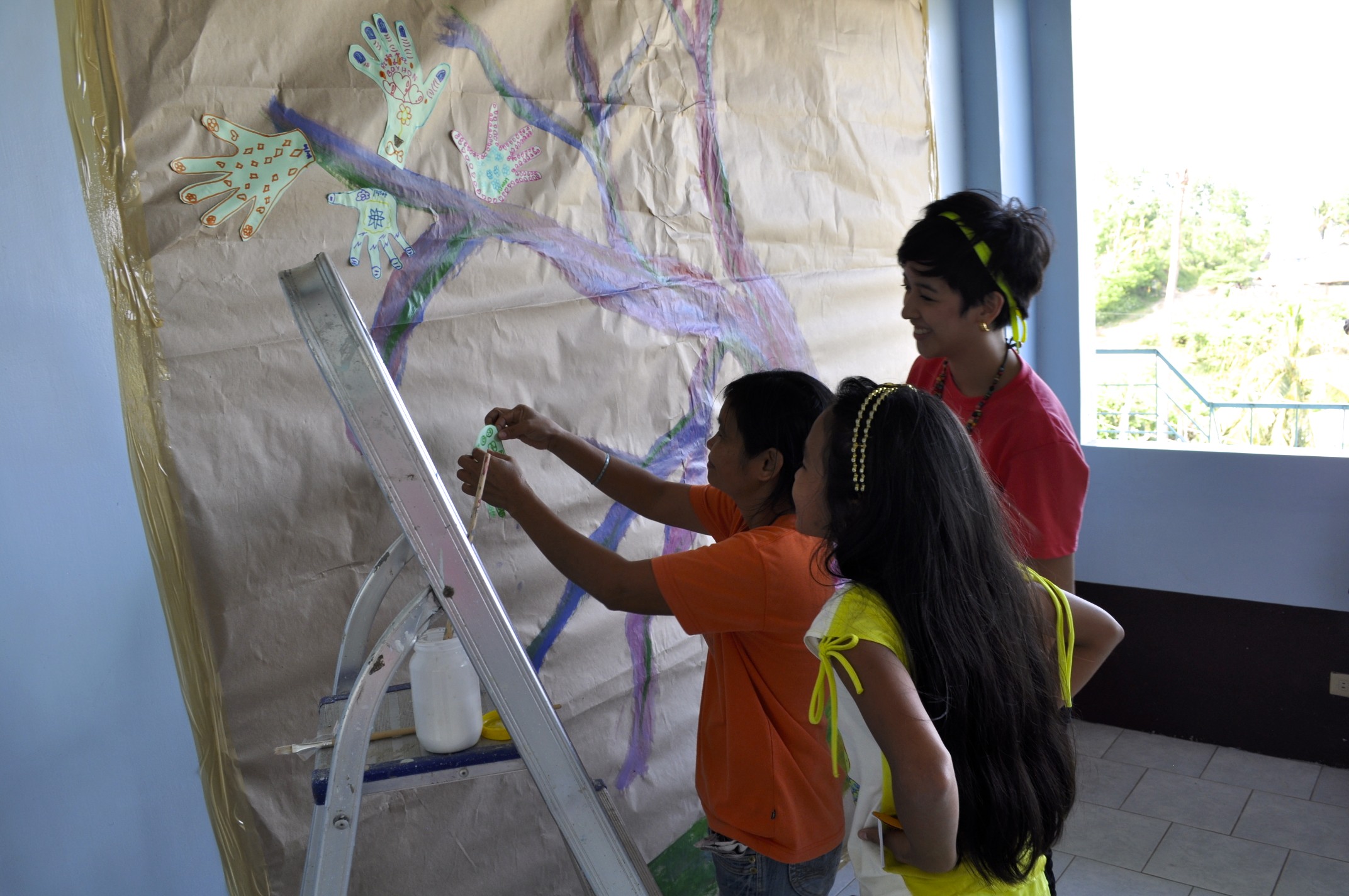
DSC_0275 DSC_0263

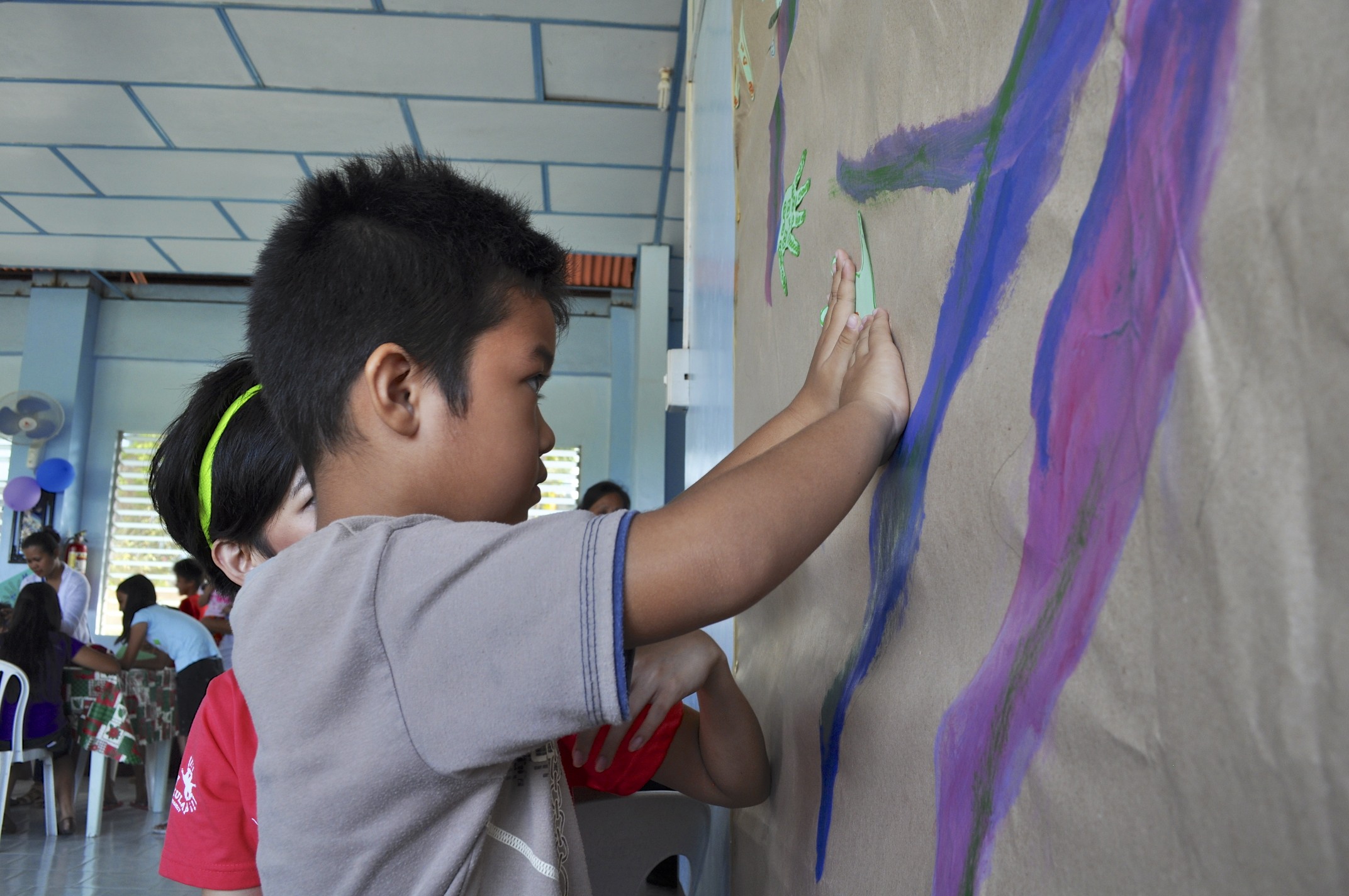
I had the joy of manning the mural station, where kids came up with their finished leaf-hand or butterfly-fruit, ready to add to the tree. They all came shyly forward, craft in hand. Some were too shy to paint on the glue themselves and even more embarrassed to glue it on the collage on their own. After putting their work up, I would give them high fives which would stir up their smiles. Others had scuttled away before I could turn around to face them from the collage!

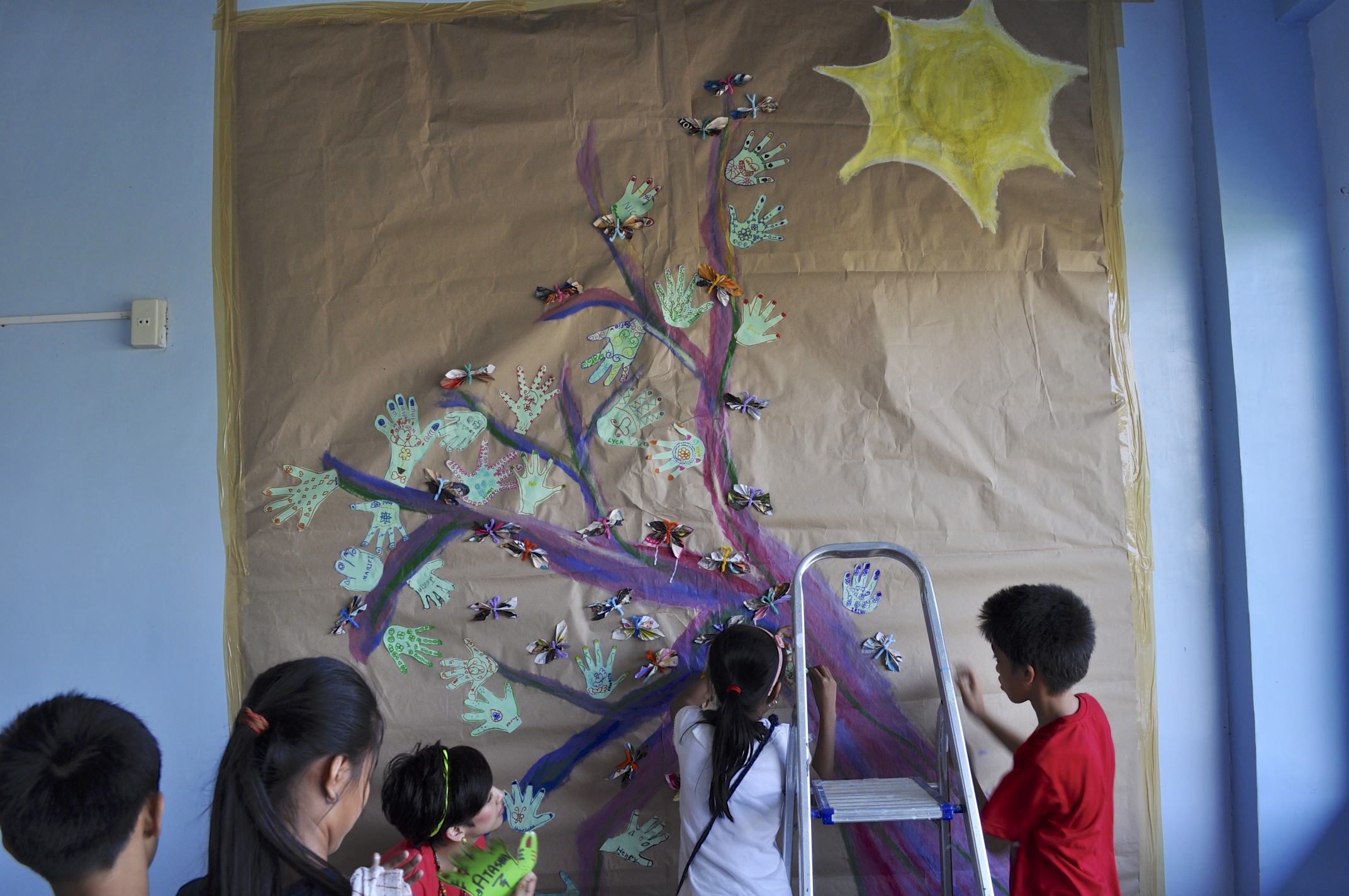
At the end of the day, we had a tree full of life and hope!
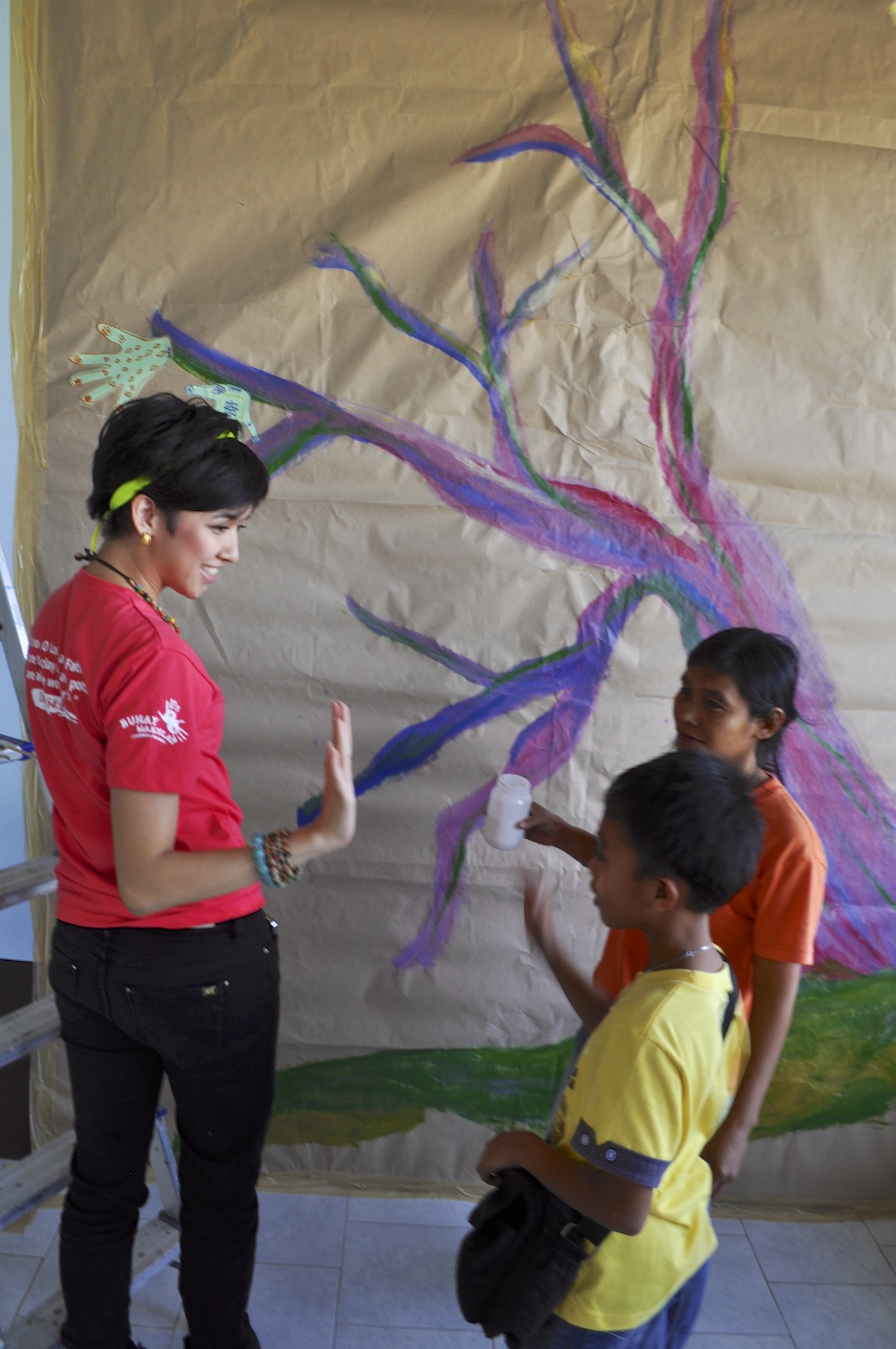
DSC_0227 DSC_0293 DSC_0343 DSC_0295 DSC_0353 DSC_0356 DSC_0357 DSC_0364 DSC_0369

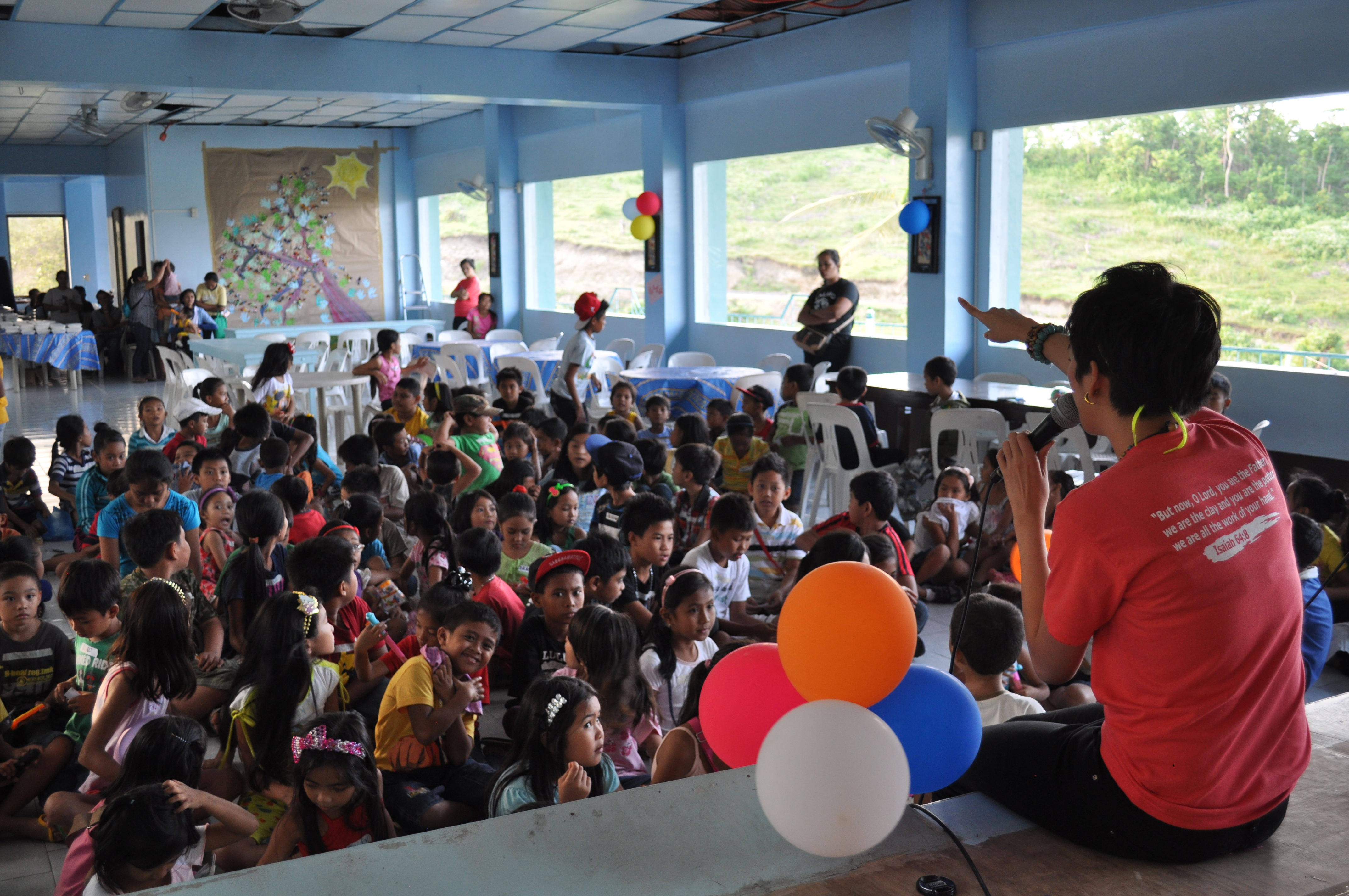
Before dinner, we gathered them and told the story of the tree’s inspiration.

Much of their world is now changed because of the storm. These kids may not have lost family, but they have lost food supply, a parent’s livelihood, a room, a roof, their whole home, or electrical power. We drew their attention to our own tree in the room.

Nothing more was missing! Their own hands and fruit have filled in the space.
DSC_0393

Look at our tree! It may be leaning over, still bearing the weight of a historically catastrophic storm, but despite that, their is hope blooming.

Just like the kalachuchi tree who shared new green in just two days, new fruit can be born of life that has been tackled down.

Today, after the storm, perhaps we can see the tilt as beautiful and in time even find that the tree, and we, have grown stronger.
DSC_0470 DSC_046120140128-133224.jpg

Love and special thanks to the Conlu family, the Grand Gazebo in Baybay beach, Our Mother of Mercy Learning School Inc., and the Sister Servants of the Poor in Lawaan Capiz.
Happy 2014!

“People with a meagre soul always try to make others feel small too, and the stranger, who could probably conceal his on the head of a pin, gave me his most disdainful look.”

-from The Prisoner of Heaven, by Carlos Ruiz Zafón.

I read Zafón’s book on Christmas day (I highly recommend it!) and this was the one passage I will never forget. Haven’t we all come across such a soul? A person that just wanted to put you down and make you feel unimportant, invisible or incapable of measuring up?

Well, enough of that.

20140101-232440.jpg
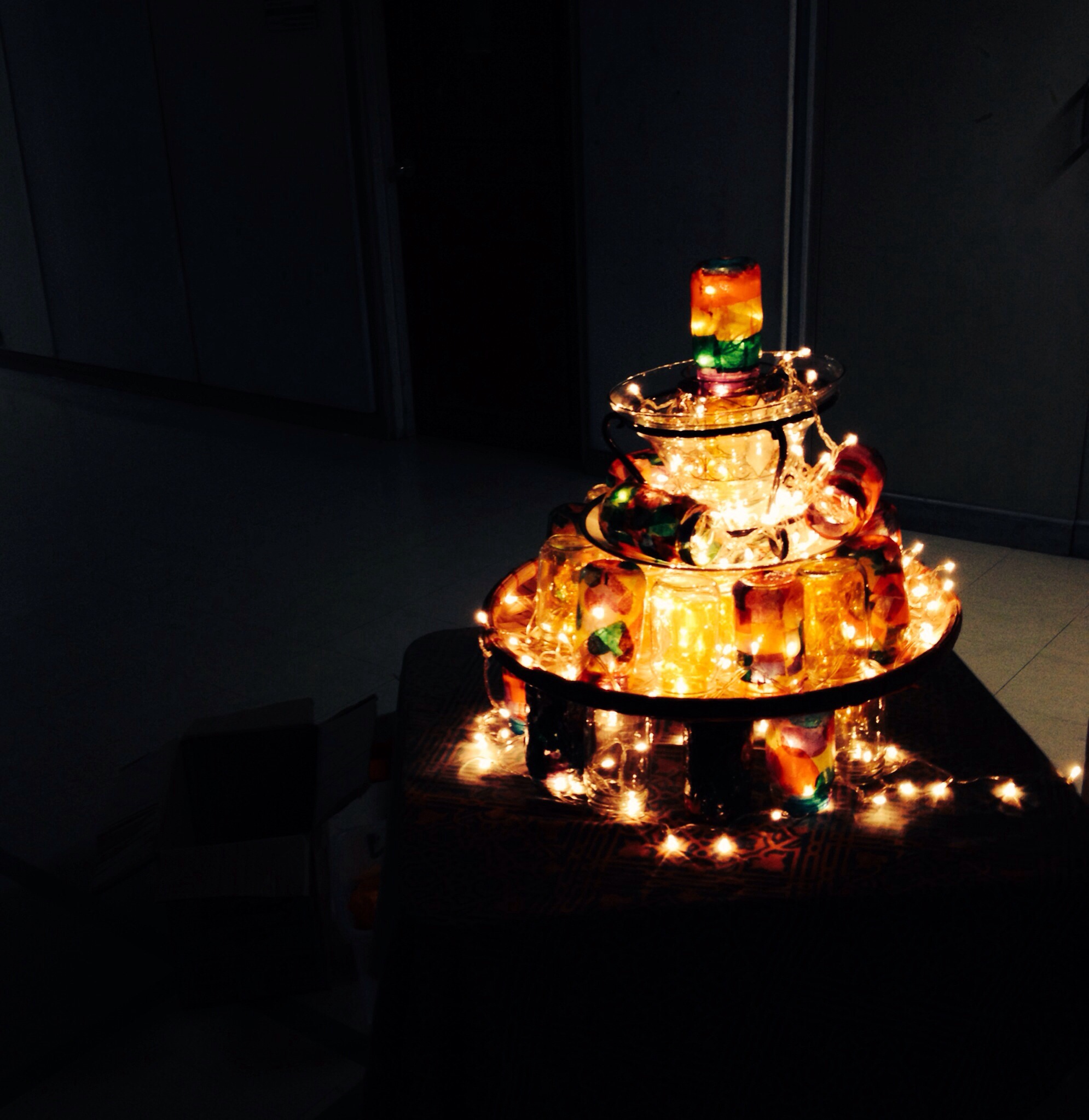
A special installation piece by yours truly, from Buhay Makulay’s LIKHA exhibit. Medium: Japanese paper collage on glass jars by our children and volunteers & found objects.

Something tells me that 2014 is going to be a breakthrough year. In all the adventures that lie ahead, may this year be one of uplifting others and building up one another.

May our souls be generous, and hopefully larger than a head of a pin. So large that ego, hatred, or jealousy have no room. Let the light of others shine. And if given the opportunity, be the one that holds them up for all to see.

Buhay Makulay 003: Season Ender

And just like that, it’s over.

For many days over the past few weeks, I would fall asleep or wake up with the Buhay Makulay song playing in my head. I would think of our children and the joy in their faces as they sang. I would look ahead toward the big surprise we had for them – our special culminating activity! But the day before yesterday, I woke up with children and the song in my mind, this time harmonized with sadness. The Buhay Makulay’s first Likha season had come to an end.

On Saturday, December 7th, Buhay Makulay had it’s first Likha Showcase! The showcase was a celebration of children and the arts! The showcase consisted of an art exhibit and a short program, all featuring the work of the 31 children we had been blessed to work with throughout this season. It was a private event, really more for the children than for anyone else. Each child invited one guest from their family, while we invited a few of Buhay Makulay’s and Precious Jewels Ministry’s closest friends and supporters. We gathered to honor the children and praise God!

LikhaShowcaseInvite
The invite I designed, featuring the beautiful and colorful paper collage made by the children who focused on visual art for majority of our program.

This was the most ambitious program I’ve launched for Buhay Makulay so far. In my mind and heart it has been years in the making. The vision for the showcase I have held so long, I cannot believe it has already come true, almost exactly how I had pictured it! This was the first art exhibit I’ve ever really curated and installed, and I certainly hope it is only the first of many. It was small in scale, but gigantic in story.

The activity was not just an event, but part of a larger narrative. Though us volunteers and partner staff could see the growth in the children during our time together, we were not sure that the children could yet grasp the weight of their discoveries and accomplishments. The activity was meant to help see how far they had come!

IMG_7220

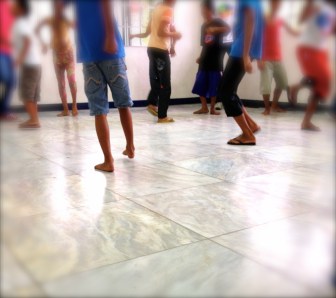
This was a special day for them. These children live in cramped quarters, some under a bridge and some in relocated communities, all from the poor corners of the city. They do not have room in their homes to dance, or large spaces on their walls on which their artwork can be displayed and appreciated.

This was a special day for them. All the fun and learning they had with us could finally be shared with the people that raise and care for them on a daily basis. Most brought their mothers, others their fathers, and a few their older sisters or brothers. We were sharing with family. We were making known to them their own incredible value that so often gets lost behind poverty line.

This was a special day for them. The kids walked around the exhibit, pointing out to their mothers which drawings or crafts they had made. Mothers watched on bright-eyed, as their kids danced onstage. Little kids came up to our volunteers, with a wealth of smiles that many weeks ago were so hard to wedge out of them. And I watched, in disbelief and wonder, at the sweet celebration taking place around me. As we knew from the beginning, all our hard work is worth it.

Buhay Makulay - Hope
The banner of Team Hope (ages 8-10) -a collage made entirely out of recycled paper, fabric and dyed eggshells. Our children learned that beauty can be made of the scraps. God makes beautiful things out of us, out of dust.This was made on our third workshop day, before our children chose to focus on visual or movement arts.

I’m not huge on television series’, but thanks to online streaming I have become dedicated to a few.  I can get through a whole season of a show with much excitement, watching episode right after episode. But I have a tendency to hold off watching the season enders. Nearing a season’s conclusion, I slow down. Sometimes I put it off for longer, until the following season already starts so I won’t have to wait in agony between stories. (At this moment, I have yet to watch three season enders of three different shows whose seasons ended months ago!)

I’d rather wait in willing suspense, than just have things be plain over.

Perhaps this is the feeling that I woke up with the other day – wishing we were still looking ahead to the big surprise for the kids, rather than knowing that the celebrations had been celebrated.

In the weeks to follow, I hope to continue to process the experience and share incredible stories of learning and blessing. Thankfully, there is much to share!


What I Learned About Process + Learning, from the Process of Creating Art

Yesterday I had nowhere to be.

I could barely wrap my head around this predicament. For the first time in a long time, I had the luxury of having a whole day to myself! When was the last day I had nothing scheduled? No children’s workshop to run, no fitness classes to teach, no work to supervise, no meeting to attend, no reports to write, no spreadsheets to look over. Not a single pressing deadline! The daily grind could wait until tomorrow. Or even the day after. I was beginning to fear I was forgetting something!

You should probably stay home and do nothing then,” my brother told me when I shared my bare-boned Saturday plans, “This is rare.” With two day jobs and a number of volunteer positions – a quiet, slow day is a treasure!

Despite the day off, I was determined to do a number of things; a number of restful, enjoyable, life-enriching things:

1. Wake up slowly, but not too late in the day.  
2. Not do anything work-related – not even problem solving in my head, checking emails or reading work-related articles.
3. Write, read, or draw.  
4. Not waste away the day scrolling down social media news feeds.
5. Watch a film.
6. Do some chores. 

I don’t think I did too bad. I woke up a little after nine in the morning – not too early nor too late, with many free hours ahead of me! I steered away from even thinking of work obligations, and except for checking my email twice (just to make sure I wasn’t missing anything urgent!) I didn’t even look at my favorite management or leadership blogs. I wrote, read and drew. I spent very little time on the typical social media sites, even less than I do on a regular day. I watched multiple films, not just one – great sappy background to my drawing session, pairing well with the heavy rain outside. I even got my laundry done! (I had to feel at least a little bit useful!)

IMG_5506
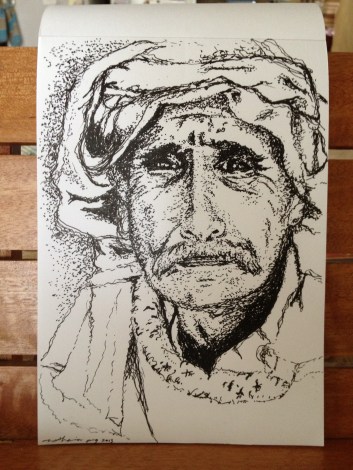
A drawing by yours truly.
Original photograph by Tim Barker, captioned, “At Petra in Jordan, a man wears the traditional costume of the Nabataean culture that established Petra as their capital around the 6th century BC.”

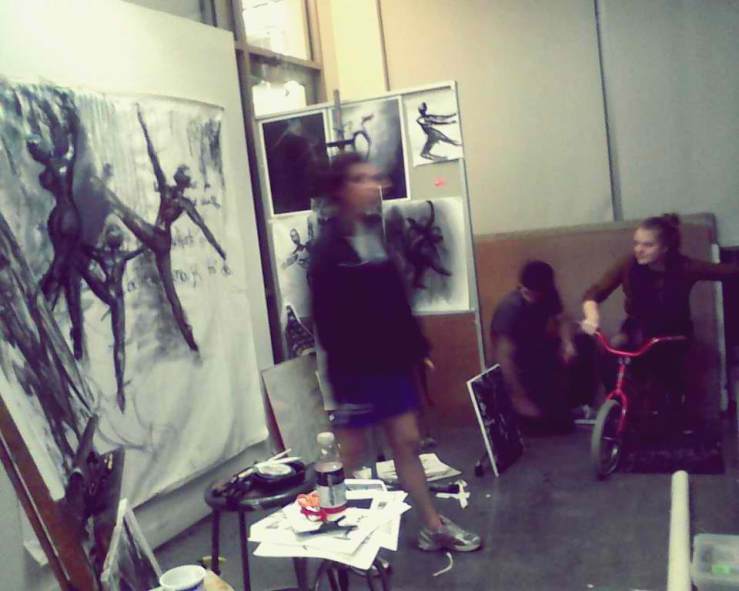
But really, I spent the entirety of my day drawing. (Read more about it here.) All the hours working in my sketchbook yesterday reminded me of the wealth of time I spent simply working on art in college. I had to, it was my major. And for every hour of class in college, you were expected to work a minimum of four more hours outside. More often than not, that wasn’t really enough time to get your work done. Making art is really much more time consuming than most people expect. You could be working on a square inch of space for days! A small piece of art is sometimes made up of thousands of tiny strokes, all patiently put together by hand.

studiowheat
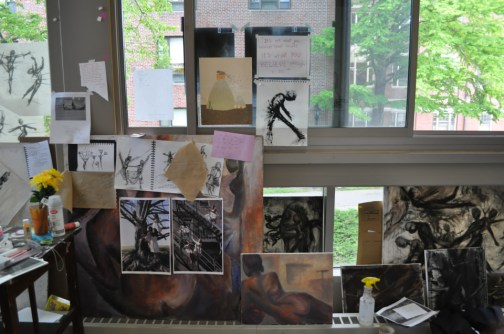
Slice of my senior year studio at college.

It was this process of creating art that really helped me understand more about the process of learning. Here are a few reflections:

1. Just put in the hours.
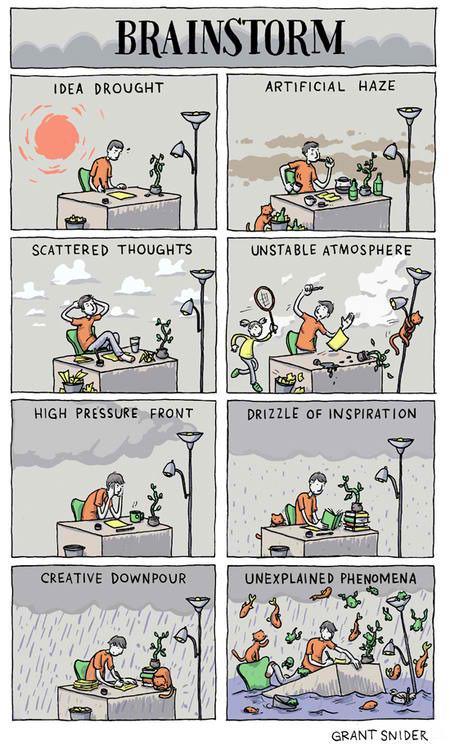
When you don’t, it shows. Sometimes the hours are spent staring into space or doodling aimlessly, your mind experiencing a drought of inspiration. Sometimes the hours are spent making “bad” work. Sometimes the hours are spent in tedium, drawing dot beside dot beside dot, or drawing and redrawing and redrawing the same darn green pepper. Put in the hours, even when you feel like there is no learning or no progress. It’s practice, it’s all an investment. Those hours clear the path for a mind-blowing moment later, that breakthrough you thought would never come.

creativeprocess2

2. Walk away from your work and come back. Then step back. Look at it from a different part of the room.
If you’ve ever stared at a single word long enough for it to become the most absurb collection of letters you have ever seen, then you know what a difference it makes to spend some time looking away. Stand too close to your work for too long, slaving over whether you have drawn that crease in the paper just right, and you may later discover that you obsessed over something of little importance to the sum of all parts. Stand too close to your work for far too long and it may appear absurd, flawed and out of proportion. Walk away for a minute and come back. Walk away for a day and come back. The space between you and your work will give you a fresh perspective, a point from which you can see how to move forward.

creativeprocess

3. Don’t be too precious about your work.
There was a time when I was given this advice often. I valued each simple sketch and drawing too much, instead of dismissing them to practice and process. If you’ve been able to draw it once, you can draw it again, my friend told me. I wasn’t accidentally making bad or good drawings. A single well-proportioned drawing wasn’t the last. They told me to trust in my skill and ability. I soon began to enjoy the impermanence of my sketches. I would draw a figure on the canvas with charcoal, then spray it with water, so that the charcoal dancer would dissolve and drip away. Then I would do it again. I would draw, then spray, And again. It was a healthy practice. When I began to let go of my work, it opened up my learning ability. Instead of hanging on to small victories, I was practicing towards creating work more profound than any of the quick sketches I had drawn and let drip away before it.

criticcalvin

4. Let someone have a look and give a word – even when it is still in progress.
We learned, worked and progressed in public space. We failed, fussed and made ugly mistakes in that public space too. This was an important difference between the studio art department and other academic departments. There was less private time for you to get an acceptable draft before eyes landed on the budding fruit of your labor. You can’t hide your embarrassing scribble of a portrait when your professor tells the class to take a walk around the room to see everyone’s progress (or your lack thereof!). You just have to surrender to the rawness.

Art students worked in the studios – day, night or both. Someone could be looking over your shoulder at any point from first pencil sketch to final painting, a witness to every awkward, misplaced, discolored mark in between. Of course this wasn’t always the case, but it encouraged humility. It was never just your best foot forward. Your dirty laundry was often in plain sight too. I ended up loving this process and even relying on it. I sought out the feedback from others to better understand and approach my work. You need people to respond to what you do, whether or not you’ll take their advice in the end. The friends I invited back to see my work or my studio, were those who took the time to form an opinion about my work and give a critique, no matter how brief or informal. Those that only had praises, they weren’t half as interesting or valuable to have around.

calvin artt

studiovis
Friends visiting my studio late one night. We all needed a break, a walk, maybe some extra hours of sleep.

I may spend less time on my art these days, but these lessons enrich my work. It’s no matter that I work in an environment so removed from the me that drew on a canvas with a stick of charcoal in one hand and a spray bottle in the other.

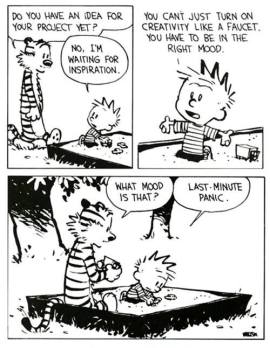
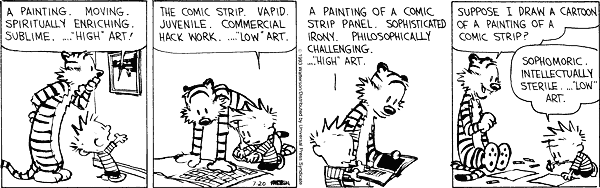
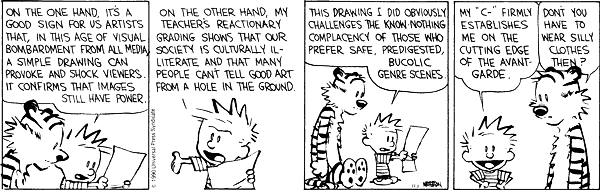
Thank you, Grant Snider and Bill Patterson for the comic strips in this post.